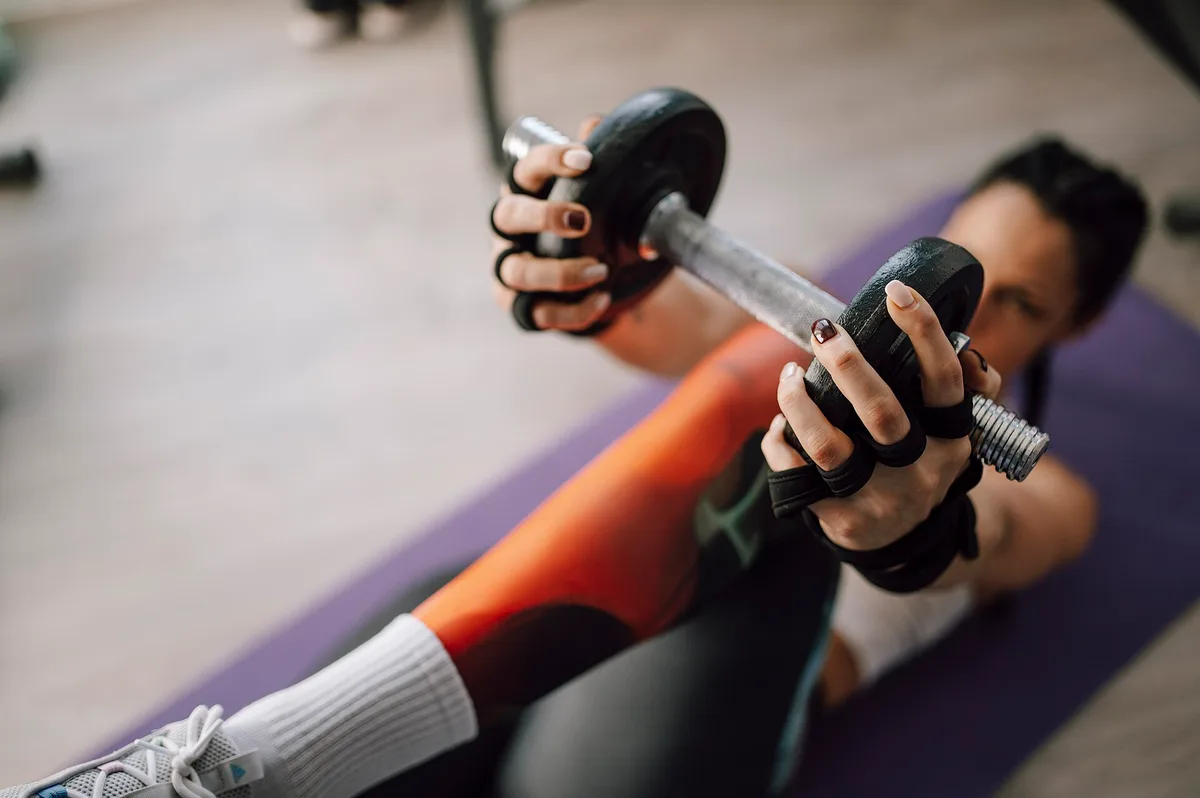

Yes, you can reduce breast size without surgery. Overall weight loss works, because breasts are largely fat tissue over glandular tissue. Training and a properly fitted bra then ease the back strain that large breasts create.
Honest expectations: how much your breasts shrink with weight loss varies with your tissue mix. If size causes chronic back, neck, or shoulder pain, reduction surgery is the established medical fix. Any new breast lump or skin change needs a doctor, not home methods.
What Determines Breast Size
Each breast is a mix of glandular tissue (milk-making structures), fat tissue, and connective tissue. The ratio is set mostly by genetics and hormones. Glandular-heavy breasts feel dense and change little with weight; fat-heavy breasts change more when your weight changes.
Why size shifts over a lifetime:
- Puberty — estrogen drives the initial growth
- Weight gain — fat is stored in the breasts like anywhere else
- Pregnancy and breastfeeding — glands grow, then partially shrink
- Menopause — glandular tissue gradually replaces with fat
- Hormone medications — birth control and hormone therapy can add volume
- Genetics — the biggest single factor of all
None of this is controllable in full. The parts you can influence are body fat, muscle support, posture, and, when needed, surgery.
Density is worth one more word. Breasts that feel firm and heavy through the whole cycle are usually gland-rich, and they respond less to weight loss. Breasts that fluctuate with your period or weight swings are fat-rich, and they respond more. A mammogram or breast exam describes your density. That is useful knowledge, since dense breasts also deserve diligent routine screening regardless of size.
Weight Loss: The First Principle
There is no exercise or cream that removes fat from one body part. Spot reduction is a myth. But when your overall body fat drops, breast size usually drops with it — sometimes a little, sometimes a lot.
The healthy pace is one to two pounds per week. That means a modest daily calorie deficit, not a crash diet. Fast loss tends to strip muscle and leave breasts sagging, which trades one problem for another. This connects to our earlier piece, How Many Rest Days Do You Need a Week? What Recovery Science Says.
Eating moves that support the goal:
- Protein at every meal — it preserves muscle while you lose fat and keeps you full
- Cut sugary drinks — liquid calories are the easiest place to create a deficit
- Watch portions of refined carbs — breads, pastries, and snack foods add up quickly
- Fill half the plate with vegetables — volume and fiber for very few calories
- Limit alcohol — it carries calories and loosens eating discipline
How much your breasts shrink is genetic. Some women drop a band or cup size after fifteen pounds. Others see little change because their breasts are mostly dense glandular tissue. Either way, the same loss improves health, posture, and how the back carries the load.
The Training Plan: Cardio Plus Strength
Exercise burns calories and builds the frame that carries your chest. Both matter for comfort, and neither shrinks the breast directly.
Cardio for overall fat loss, three to five hours weekly:
- Brisk walking or incline treadmill — the gentlest start for a heavy chest
- Cycling — no bounce, big calorie burn
- Swimming — water supports the breasts while you work
- Elliptical or rowing — low impact, steady effort
- Jogging — fine if comfortable in a real sports bra; skip it if it hurts
Strength work, twice a week, for the support system:
- Rows (dumbbell, band, or machine) — 3 sets of 10 to 12, pulling the shoulder blades together
- Lat pulldowns or assisted pull-ups — 3 sets of 8 to 12
- Chest press or push-ups — 3 sets of 10, keeping the chest strong and supported
- Face pulls or band pull-aparts — 3 sets of 15, undoing the forward slump
- Plank — 3 holds of 20 to 45 seconds for the deep core
A common myth says chest exercises make breasts smaller. They do not. Push-ups build the pectoral muscle beneath the breast, which improves support and shape. Fat sits on top and only shrinks through overall loss.
Another myth says training makes breasts bigger. Also no — muscle grows under the breast, not in it.
Posture and Back Relief
Large breasts pull the shoulders forward and the head down. Over years this loads the neck and upper back. It drives the bra-strap grooving many women know, and it can contribute to headaches and tingling in the hands.
Training the back muscles is the long-term fix. These daily moves take five minutes:
- Doorway chest stretch — forearms on a door frame, step through, hold 30 seconds
- Chin tucks — draw the head back over the shoulders, 10 reps
- Shoulder blade squeezes — pinch the blades together and down, hold 5 seconds, 10 reps
- Thoracic extension over a rolled towel — 2 minutes lying over the roll
- Wall angels — back to a wall, slide arms up and down, 10 slow reps
Stand tall rather than hunching to hide your chest. Hunching does not make breasts smaller — it makes the strain worse and the posture aged. This is a load-management problem, not a body-shame problem.
The Right Bra: Real Fitting Steps
A bra will never reduce breast size. A correct one reduces pain, improves the silhouette, and stops daily strain. Most women wear a band too loose and a cup too small. That shifts the weight onto the shoulders instead of the ribs.
Fit yourself properly:
- Measure your ribcage snugly, right under the bust, exhaling fully. That is your band size.
- Measure loosely around the fullest point of the bust while wearing an unpadded bra.
- Each inch of difference between the two measurements is roughly one cup size.
- Try on several bras in that size. The band should carry the weight — firm, level, and parallel to the floor.
- Straps should support, not dent. If they dig, the band is doing too little of the work.
- The wire or cup edge must sit fully behind the breast tissue on the ribs.
- Move: arms up, bend over, jump. Nothing spills, gaps, or rides up.
For larger cup sizes, look for wide straps, full-coverage cups, three or more hooks, and firm side panels. For workouts, a high-support encapsulation sports bra is worth every dollar — bounce is the main source of exercise pain.
Do "Estrogen-Lowering" Foods Work?
You will read that green tea, flaxseed, and cruciferous vegetables shrink breasts by balancing estrogen. The honest read: the evidence is thin. These foods are healthy, and fiber-rich eating is worthwhile for everyone. But no vegetable overrides genetics, body weight, or prescribed hormones.
Sensible version of the idea:
- Flaxseed — a fine source of fiber and omega-3s; stir a tablespoon into yogurt
- Green tea — a good swap for sugary drinks, mildly useful for appetite
- Cruciferous vegetables — broccoli, cabbage, cauliflower: eat them freely
- Whole grains and legumes — the fiber base of a fat-loss diet
Do not buy "hormone-balancing" supplements marketed for breast shrinking. They are unregulated, unpredictable, and occasionally harmful. Food supports the process; it is not the process. Keep real hormone concerns in a doctor's office, not the supplement aisle. Sudden growth, disruptive cyclical pain, and new lumpiness all belong there.
What Does Not Work or Backfires
- Spot-reduction exercises — no movement pulls fat from the breasts specifically
- "Breast shrinking" creams — nothing applied to skin reaches the fat or glands
- Belly-fat pills and detox teas — water loss at best, danger at worst
- Tight binding for long hours — restricts breathing, irritates skin, and deforms tissue over time; short-term flattening only
- Skipping the sports bra to "let them shrink" — unsupported exercise damages support ligaments and worsens sagging
If a method sounds faster than biology allows, that is the marketing talking.
When Size Becomes a Medical Issue
Very large breasts — doctors call it macromastia — can do real physical damage over the years. The condition is about symptoms, not a cup size on a chart.
Signs your breast size is a health issue:
- Chronic back, neck, or shoulder pain that persists through the month
- Deep, lasting bra-strap grooves on the shoulders
- Recurring rashes and skin irritation under the breast fold
- Numbness or tingling in the arms and hands
- Headaches rooted in the neck and upper back
- Exercise avoided because bouncing or weight makes it hurt
- Posture changes visible in photos year over year
Doctors start conservatively here: strengthening exercises, weight management, and professional bra fitting. These relieve some of the load, and they are worth doing regardless. When symptoms persist despite them, surgery enters the conversation.
Take the symptoms seriously even if they feel minor today. Years of forward load quietly reshape the spine's curve and the shoulder girdle. Women who address the strain early, with training and better bras, often avoid heavier interventions entirely. Those who need surgery anyway tend to recover faster from a stronger, better-supported starting point.
Breast Reduction Surgery: The Established Fix
Reduction mammaplasty removes fat, glandular tissue, and skin, then reshapes the breast smaller and higher. The nipple and areola are repositioned, and the areola is often made smaller too. The operation takes two to five hours under general anesthesia. Most women go home the same day or after one night.
What to know honestly:
- Relief is the point — back, neck, and shoulder pain, rashes, and strap grooving typically improve or resolve; most women report easier exercise and better sleep
- Recovery — a surgical bra for several weeks, drainage tubes out within days, and weeks before heavy lifting
- Risks — permanent scars, changes in nipple sensation, uneven size or nipple position, and possible difficulty breastfeeding later
- Smoking — quit before surgery; it slows healing and raises complication risk
- Stability — future pregnancies and major weight change can alter the result
When chronic pain and other symptoms are documented, the operation is often treated as medically necessary rather than cosmetic. That conversation starts with your primary doctor or a plastic surgeon, including a review of what you have already tried.
Questions that make the surgical consult productive:
- How much tissue can safely be removed in my case?
- Which technique, and where will the scars sit?
- What happens to nipple sensation and future breastfeeding?
- What does recovery look like week by week?
- What should I try first if surgery is not yet the right step?
Bring your history to the visit: how long the pain has lasted, what training and bras you have tried, and any rashes or numbness. Documentation of conservative attempts strengthens the case for coverage.
How Fast Changes Happen
Set expectations on the calendar before you start, and the process stops feeling like failure:
- Week one — posture work and a fitted bra change comfort and silhouette immediately; the scale barely moves
- Weeks two to four — cardio becomes easier; the first one to four pounds come off
- Months two to three — bra band may feel looser; back and shoulder strain typically eases as posture muscles strengthen
- Months four to six — the size change from fat loss becomes visible in photos; strength numbers climb
- Month six and beyond — reassess: if symptoms persist despite real effort, the surgical conversation is fair
Track three things monthly:
- Weight
- A photo in the same bra and light
- A one-to-ten rating of your back and shoulder pain
The pain score is the one that matters for later medical decisions. It is also the number most likely to improve first, well before the tape measure moves.
One caution about crash diets. Losing weight very fast strips muscle, including the back muscles that carry your chest. It also leaves breast skin sagging after a rapid shrink. Slow loss is not just safer — it produces a better shape on the other side.
When to See a Doctor
Seek care promptly for:
- A new lump in the breast or armpit
- Skin dimpling, thickening, or an orange-peel texture
- Bloody nipple discharge, or a nipple that suddenly inverts
- One breast changing differently from the other
- Rapid breast growth over weeks to months without weight change
Plan a regular visit when:
- Back, neck, or shoulder pain limits work, sleep, or exercise despite training and a good bra
- Rashes under the breast fold keep returning
- You want a professional opinion on whether reduction surgery fits your situation
- You are considering pregnancy but struggle with symptoms now — timing matters
Can you reduce breast size without surgery?
Often, yes, partially. Breasts with a high fat proportion shrink with overall weight loss. Strength training and a well-fitted bra reduce pain and strain. Breasts that are mostly dense glandular tissue change little without surgery.
Will losing weight make my breasts smaller?
Usually, by an amount set by your tissue mix. Some women lose a full cup size over twenty pounds; others see minimal change. Weight loss is still worthwhile — it lightens the load your back carries and improves health overall.
Do chest exercises shrink breasts?
No. Push-ups and presses strengthen the pectoral muscle under the breast. Fat on top only shrinks through an overall calorie deficit. Training improves support and shape, which often reads as a better-proportioned chest.
Does breast reduction surgery relieve back pain?
For most women, yes, substantially. Neck, shoulder, and back pain, rashes, and strap grooving typically improve or resolve after the excess tissue is removed. Recovery takes weeks, and scars fade over the first year.
Can I breastfeed after a breast reduction?
Sometimes, but it is not guaranteed. The surgery can disrupt milk ducts and nerves, so plan the conversation with your surgeon before the operation if future children are possible.
Conclusion
Reducing breast size starts with the method that always works: gradual overall fat loss at one to two pounds a week, with plenty of protein and no crash diets. Add back and chest strength training to carry the load well, daily posture work to unload the neck, and a professionally fitted bra with a real sports bra for workouts. Skip the creams, pills, and spot-reduction claims. For related coverage, see Strength Training After 40: What the Evidence Says Works.
When size causes chronic pain, rashes, or numbness — macromastia territory — conservative measures come first, and reduction surgery is the established, symptom-relieving fix. Whatever your route, treat any new lump or breast change as a medical matter first, before any of it.