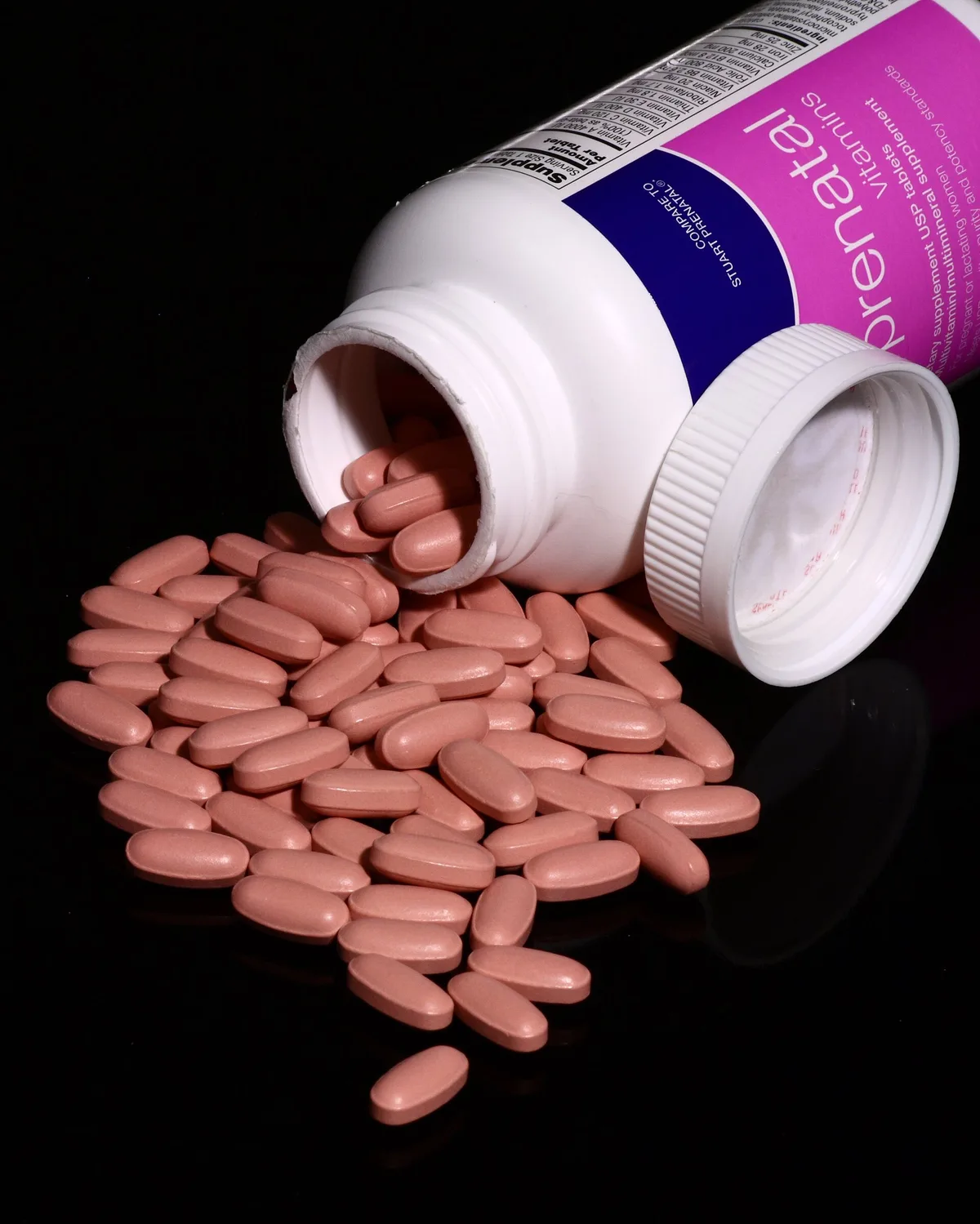
Prenatal vitamins earn their spot with a short list of proven nutrients: per the National Institutes of Health, all women and teen girls who could become pregnant should get 400 micrograms of folic acid daily, a dose tied to fewer neural tube defects. Most of the rest on the label is packaging.
The line runs between doses and forms documented by major health groups, and label claims with no such record. Price says little here: per Wikipedia's entry on prenatal vitamins, prescription versions are typically not much stronger than store versions. Readers following this should also see Blood Pressure Numbers Explained: What 120/80 Actually Means for You.
Which Nutrients Actually Matter?
Start with the list from the American College of Obstetricians and Gynecologists: during pregnancy you need folic acid, iron, calcium, vitamin D, choline, omega-3 fatty acids, B vitamins, and vitamin C. Its table sets iron at 27 mg daily, calcium at 1,000 mg for ages 19 to 50, and iodine at 220 mcg. Iron carries weight because it helps red blood cells deliver oxygen to the fetus, per the same guide.
How Much Folate Do You Need?
Two numbers cover it, per the NIH Office of Dietary Supplements: 400 mcg of folic acid daily before and in early pregnancy, and 600 mcg DFE for pregnant teens and women. The DFE unit exists because the body takes up folic acid from pills better than food folate, so 240 mcg of folic acid counts as 400 mcg DFE. Timing does real work: a pooled analysis of 41 studies, cited by Wikipedia, found that starting folic acid before conception can cut neural tube defects by as much as 70 percent. The NIH adds that folic acid went into US grain foods by law in 1998, and cases have dropped since.
Is Methylfolate Worth the Markup?
Usually not, if you ask the NIH. Its fact sheet allows that 5-MTHF, the methylfolate sold at a premium, may suit some people with an MTHFR C677T gene variant. Yet the same sheet tells all women and teen girls who could become pregnant to take 400 mcg a day of folic acid, not 5-MTHF, variant or not. So the trendier form is not the one the evidence backs for pregnancy. Wikipedia adds that many prescription prenatals do carry 5-MTHF, a point of fashion more than proven need.
Do Prescription Prenatals Work Better?
The record says strength does not separate them. Per Wikipedia's entry, prescription versions are typically not much stronger than retail ones. The real gaps lie in consistency and quality control, plus how well some ingredients are absorbed, so a prescription can be worth it when insurance covers it, just not because it is stronger. Folic acid doses above 1 mg need a prescription, and Wikipedia warns that the pile of store pills needed to reach that dose could bring too much vitamin A.
What Else on the Label Deserves Caution?
Two things. First, vitamin A: prenatals keep it low on purpose, since it can cause birth defects at higher doses, per ACOG. Second, the serving size: ACOG says take one serving a day and read the bottle, since a serving can be several pills. Wikipedia also notes constipation from the high iron content; makers answer it with other dosage forms, such as chews and liquids, which changes format, not nutrition. We covered a connected angle in Vitamin D Deficiency Signs: What Low Vitamin D Actually Feels Like.
When Should You Loop In Your Prenatal Provider?
Before you add anything beyond one daily serving. ACOG says an ob-gyn who wants you to have more of a nutrient will call for it as a separate supplement, so extra pills are their call, not yours. Bring the labels of all you take to your next visit, including any standalone bottles.
Conclusion: The bottom line
The documented core is short: 400 mcg of folic acid daily before pregnancy, 600 mcg DFE during, plus iron at 27 mg, calcium, vitamin D, and iodine at 220 mcg, per NIH and ACOG. The thinnest records belong to methylfolate premiums and prescription mystique, per Wikipedia's entry. Next step: read your label tonight for the folic acid and vitamin A lines, and note what you cannot match to those numbers.