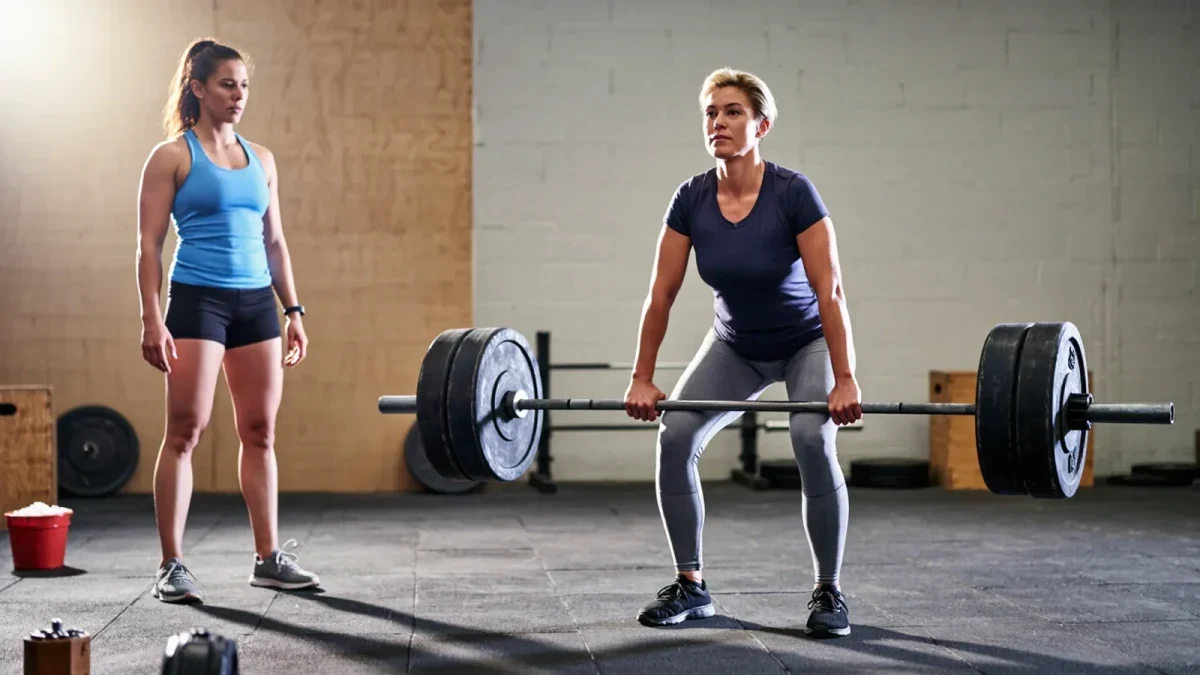
Yes, strength training works after 40 — research shows adults who lift weights two to three days a week gain roughly 1.4 kg of lean mass and lose about 1.8 kg of fat over the first 10 weeks, regardless of whether they start in their 40s or their 70s, per a review in the Journal of Strength and Conditioning Research (Westcott, 2012). Muscle tissue at middle age is not the muscle tissue of your twenties, but it remains highly responsive to the same stimulus: progressive, deliberate resistance work. The bigger risk after 40 is not training — it is not training.
If you have heart disease, osteoporosis, uncontrolled blood pressure, or an existing joint or back problem, check with a clinician about which exercises and loads are appropriate before starting.
Why does strength training matter more after 40?
Because the natural drift is against you. Per the National Institute on Aging, adults lose roughly 3-8 percent of their muscle mass per decade after 30, and the rate of loss accelerates after about 60 — a process called sarcopenia that drives frailty, falls, and loss of independence. Muscle loss also means slower resting metabolism and worse blood-sugar handling, since muscle is where most glucose is disposed of. Resistance training is the only intervention the evidence consistently shows reverses this trend: the 2012 Westcott review compiled trials across age groups and found strength gains averaging 30-50 percent over the first 10 weeks of training, with the oldest participants gaining as much in relative terms as younger ones. A randomized trial in postmenopausal women with low bone mass (Watson and colleagues, Journal of Bone and Mineral Research, 2018 — the LIFTMOR trial) found that supervised heavy resistance training plus impact loading improved bone mineral density and strength without injuries, directly countering the fear that lifting damages aging bones.
How often should you lift after 40?
Two to three sessions a week covers the evidence well. The federal Physical Activity Guidelines for Americans, 2nd edition (HHS, 2018) recommend muscle-strengthening activity on at least two days a week, and the American College of Sports Medicine advises 48 hours of recovery between sessions for the same muscle groups. In practice:
- Two sessions — enough to maintain and slowly build strength; ideal when time is short.
- Three sessions — the sweet spot for most adults over 40, allowing recovery between while practicing movements often enough to progress.
- More than three — no additional benefit is required; joint and connective tissue recovery, which slows with age, becomes the limiting factor, so extra days should be light or split by body part.
Warm-up matters more than it did at 25: five to ten minutes of easy cardio and light ramp-up sets before working weight reduce the stiffness-heavy first reps that strain cold joints.
Which exercises give the most return?
Compound movements — exercises that work several joints and muscle groups at once — deliver the most benefit per minute and mimic real life:
- Squat pattern: bodyweight squat, goblet squat, or sit-to-stand from a chair.
- Hinge: deadlift or hip hinge with dumbbells; trains the glutes and back chain that protect the lower back.
- Push: push-up or bench/overhead press.
- Pull: row with dumbbells or resistance band; counterbalances desk posture.
- Carry: farmer's carry — grip, core, and posture in one move.
One to three sets of 6-12 repetitions per exercise, leaving one or two repetitions in reserve, is a dose ACSM guidance describes as effective for both strength and muscle gain. Progress by adding a small amount of weight or a repetition whenever all sets feel manageable — progressive overload is the mechanism that drives the gains, at any age.
Is it too late if you have never lifted before?
No — the research says the opposite. Training studies consistently enroll sedentary adults in their 60s and 70s and record large strength improvements within weeks; the Westcott review (2012) found no meaningful age ceiling on initial response. Strength is also protective precisely where age costs most: grip and leg strength predict mobility and independence in older-adult cohorts, and the 2018 LIFTMOR results showed bone benefits even in women with diagnosed low bone mass. Start with bodyweight and light dumbbells, expect the fastest improvements of your life in the first two to three months, and consider one or two sessions with a qualified trainer to lock in technique.
What does recovery look like after 40?
Slightly slower, not dramatically so. Delayed-onset muscle soreness follows the same 24-72 hour pattern ACSM describes, and sleep plus protein support repair: the federal guidelines pair strength days with adequate total activity, while nutrition research commonly cited for older adults recommends spreading protein across meals — about 25-30 grams per meal is a widely used practical target per studies in older adults (Moore and colleagues, Journal of Gerontology, 2015, which identified roughly 0.4 g/kg per meal as maximizing muscle protein synthesis in older men). What changes after 40 is mainly joint tolerance: heavy maximal singles matter less, consistent moderate training matters more.
When should you talk to a clinician?
Get medical clearance first if you have a history of heart disease, chest symptoms with exertion, uncontrolled hypertension, osteoporosis, recent surgery, or significant joint pain. During training, stop and seek advice about any sharp pain, joint swelling, dizziness, or pain that persists beyond a few days after a session.
The bottom line
After 40, two to three strength sessions a week built on five compound movements, progressed gradually, reverse the muscle and bone losses the National Institute on Aging associates with aging — with measurable gains inside 10 weeks (Journal of Strength and Conditioning Research, 2012). Schedule your sessions like appointments, leave a day between them, and start this week with bodyweight versions of the five patterns.