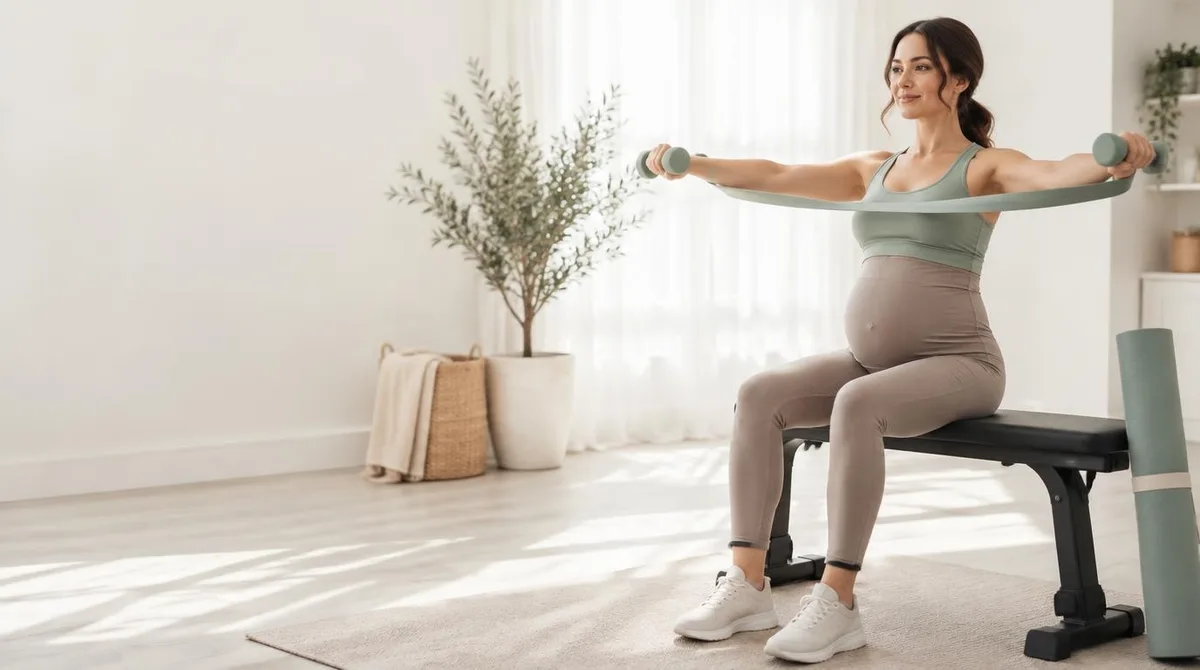
Strength training during pregnancy can be safe when the pregnancy is normal and your ob-gyn approves the plan. ACOG's Committee Opinion 804 lists resistance exercises with weights or elastic bands among the activities extensively studied in pregnancy and found to be safe and beneficial.
That document stays honest about limits. It reports sparse research on strenuous lifting in pregnancy. It advises athletes who keep training to get approval from their health care providers and consider a lighter load than before. Committee Opinion 804 is the technical source behind the limits below.
Is Strength Training Safe During Pregnancy?
For exercise during pregnancy with a normal, healthy course, the ACOG exercise FAQ answers yes. It is safe to continue or start regular physical activity. ACOG adds that activity does not raise your risk of miscarriage, low birth weight, or early delivery. The FAQ also asks patients to discuss exercise with their ob-gyn at early prenatal visits. Your doctor makes the final call on safe activities together with you.
How Should the Routine Shift as Pregnancy Moves Along?
Early months are about heat. ACOG advises avoiding overheating, especially in the first trimester. It also says to skip hot yoga and hot Pilates, which can push your temperature up. For related coverage, see Women's Hormone Health — Hormone Health: Five Questions to Ask Your Doctor.
From week 20, the flat bench goes on pause. The committee opinion reports that lying flat during exercise after 20 weeks may slow blood returning to the heart. The uterus presses major vessels, and blood pressure can drop. The FAQ turns that into one rule: avoid lying flat on your back as much as possible. Incline setups and side-lying work replace flat presses. We covered a connected angle in Blood Pressure Numbers Explained: What 120/80 Actually Means for You.
Two body changes apply all along. Pregnancy hormones relax the ligaments that hold your joints steady, so ACOG warns against jerky or high-impact motions. A shifting center of gravity also makes falls more likely, which changes how you set your stance under load.
What Do Beginners Start With?
If you are new to exercise, ACOG suggests starting with 5 minutes a day. Add 5 minutes each week until 30-minute sessions feel routine. Alongside lifting, the goal is at least 150 minutes of moderate aerobic activity every week. You should be able to talk normally but not sing.
Recovery choices matter too. ACOG advises drinking plenty of water before, during, and after a workout. It lists dizziness and dark yellow urine among the signs of dehydration. A supportive sports bra protects breast tissue, and later in pregnancy a belly support belt may ease discomfort while walking.
- Resistance exercises using weights or elastic bands, named in the committee's list of studied, safe, and beneficial activities
- Modified yoga and modified Pilates classes designed for pregnancy, per the FAQ
- Swimming and water workouts, which support your weight and spare your joints
- Stationary cycling, a safer pick than a road bike while your balance shifts
When Should You Stop and Call Your Ob-Gyn?
ACOG tells beginners and seasoned athletes alike to stop and call the ob-gyn when any of the following show up:
- Bleeding from the vagina
- Feeling dizzy or faint
- Shortness of breath before starting exercise
- Chest pain
- Headache
- Muscle weakness
- Calf pain or swelling
- Regular, painful contractions of the uterus
- Fluid gushing or leaking from the vagina
Keep this list where you train. Let your prenatal team translate any symptom you are unsure about. Checking in early costs nothing and keeps small problems small.
Conclusion: The bottom line
Strength training during pregnancy rests on documented ground. ACOG's committee opinion counts resistance exercises among activities studied and found safe and beneficial. The FAQ adds the guardrails: your ob-gyn's sign-off at an early visit, heat control early on, and no lying flat on your back from 20 weeks. The next step is a talk. Bring your current routine to your next appointment and rebuild it together.