Pelvic floor muscle training is one of the better-evidenced exercises in women's health: a 2020 Cochrane review of 31 trials found it probably improves stress urinary incontinence — leaking with coughs, sneezes, and jumps — and urinary incontinence overall, though the certainty of evidence was graded moderate to low, and results were strongest with supervised training rather than leaflets alone, per the Cochrane Database of Systematic Reviews. The catch is technique: studies cited by the National Institute of Diabetes and Digestive and Kidney Diseases suggest a large share of women who try Kegels on their own squeeze the wrong muscles, which may be why unsupervised exercises so often disappoint.
If leaking is frequent, worsening, or paired with pain, a pelvic floor physical therapist can assess the muscles directly — that assessment is a step, not an admission of failure.
What is the pelvic floor, and why does it weaken?
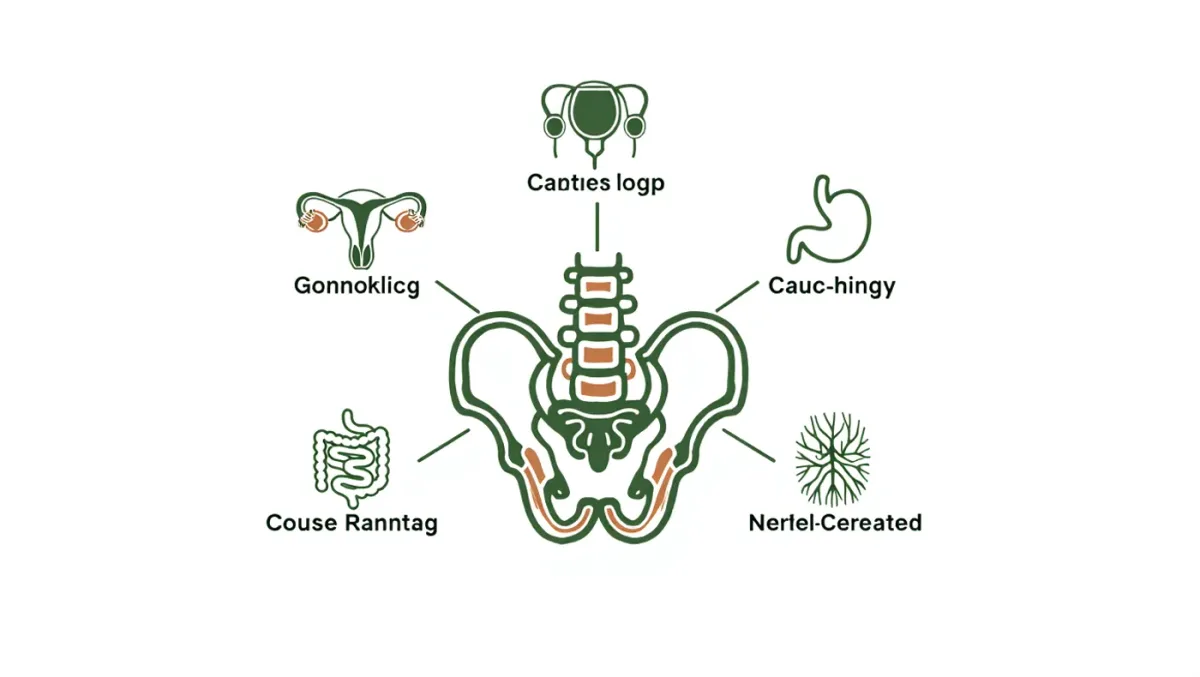
The pelvic floor is a hammock of muscles stretching from the pubic bone to the tailbone, supporting the bladder, uterus, and bowel and controlling the openings for urine and stool, per the NIDDK. Two life stages do most of the damage. Pregnancy and vaginal childbirth stretch and sometimes tear the muscles and their nerves, and menopause subtracts estrogen, which thins muscle-supporting tissue. The NIDDK notes that urinary incontinence is roughly twice as common in women as in men, and stress incontinence — leaking under pressure from a cough, laugh, or jump — is the most frequent type in younger women, while urgency-dominant overactive bladder becomes more common with age.
What does the evidence actually say?
The headline finding is positive but qualified. The 2020 Cochrane review concluded that pelvic floor muscle training probably improves both stress and mixed urinary incontinence compared with no treatment or placebo, and that adding biofeedback may improve outcomes further, per the Cochrane Database of Systematic Reviews. For pregnancy, trials summarized in the same review suggest training during pregnancy reduces the risk of postpartum urinary incontinence. Two honest caveats matter. First, effect sizes are modest — improvement, not cure, for most women. Second, the authors graded much of the evidence moderate or low in certainty because trials vary in how training is delivered. For pelvic organ prolapse, the evidence is thinner: a large 2014 trial in The Lancet found a structured program reduced prolapse symptoms modestly but did not prevent progression, per the published analysis.
How do you do a Kegel correctly?
Find the right muscles first, per the NIDDK's patient instructions: the ones that stop urine midstream — used once, only to locate the muscles — or the ones that tighten around the vagina as if stopping gas. Then, on an empty bladder:
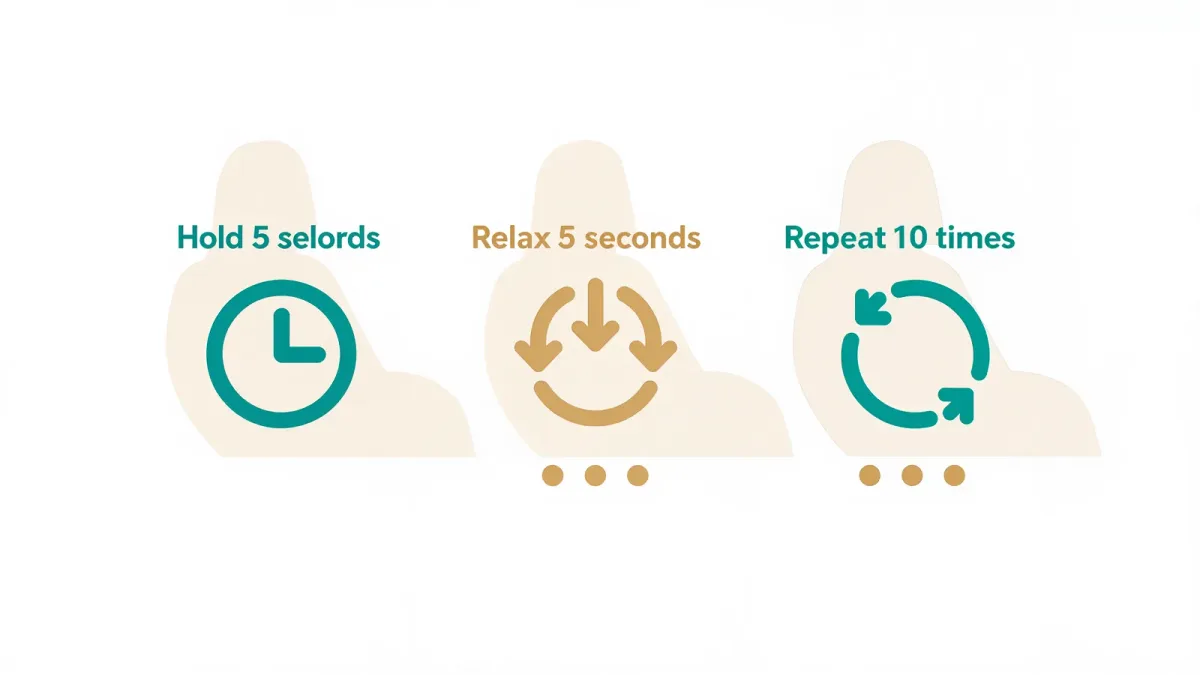
- Tighten the pelvic floor muscles and hold for three to five seconds while breathing normally
- Relax completely for an equal count — the relaxation is part of the exercise
- Repeat 10 times, and aim for three sessions spread across the day
- Progress to longer holds of up to 10 seconds as control improves
The glutes, thighs, and belly should stay quiet; holding your breath or bearing down means the wrong muscles are working. Common mistakes, per pelvic therapists cited in clinical reviews, include clenching abdominals, over-tightening without ever releasing, and quitting at six weeks when tissue adaptation takes closer to three months.
When should exercises be paired with professional help?
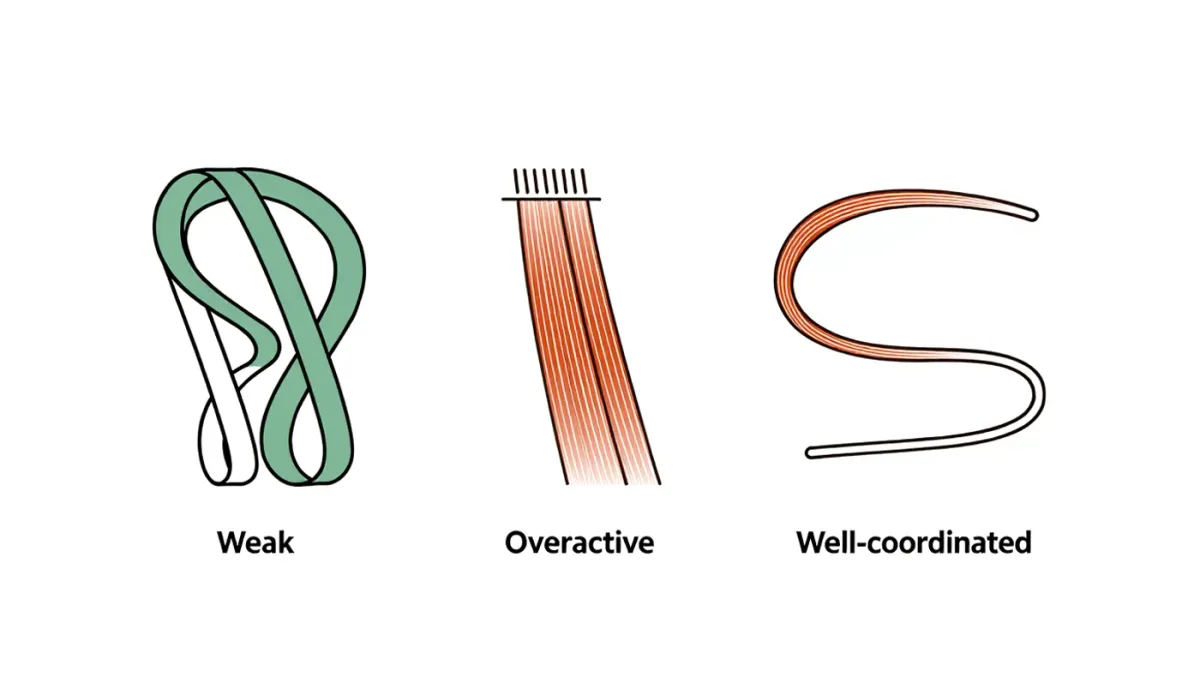
Several situations, per guidance from the NIDDK and ACOG. Seeing a pelvic floor physical therapist makes sense when leaks persist after eight to twelve weeks of consistent training, when the cause involves childbirth injury, when incontinence comes with heaviness or bulge suggesting prolapse, or when the problem is urgency rather than pressure leaks — urge incontinence responds better to bladder retraining than to Kegels. Biofeedback devices and surface EMG give real-time confirmation that the correct muscles are contracting, which the Cochrane review found may add benefit. Notably, sometimes the problem is muscles that are too tight rather than too weak, and Kegels make that situation worse — another reason professional assessment earns its place.
What about during and after pregnancy?
This is where prevention evidence is strongest. Trials included in the 2020 Cochrane review found that women who trained their pelvic floors during pregnancy had lower rates of postpartum urinary incontinence months after delivery, and the training was safe in uncomplicated pregnancies, per the Cochrane Database of Systematic Reviews. After childbirth, the practical advice from the NIDDK is patience plus early gentle work: start with short three-second holds once bleeding has settled and any perineal wound has healed, and treat any pain with exercise as a reason to slow down and get assessed rather than to push through. Women who had forceps deliveries or significant tears benefit most from early professional involvement rather than app-based routines alone.
When to talk to a clinician
See a clinician if leaking interferes with exercise, work, or sleep; if you feel a bulge or pelvic heaviness; if leakage follows childbirth with pain that is not improving; if you lose urine suddenly without urge or trigger; or if you notice blood in your urine, which is never an incontinence problem to self-manage. Also raise it before gynecologic surgery or during pregnancy — training early changes outcomes, per the Cochrane evidence.
The bottom line
Pelvic floor muscle training probably improves stress urinary incontinence, and training during pregnancy may prevent postpartum leaking, per the 2020 Cochrane review of 31 trials — with the strongest results coming from correct technique and supervision, per the NIDDK. Do three sets of ten relaxed-and-released contractions daily, expect roughly three months rather than six weeks, and bring in a pelvic floor physical therapist if leaking persists or urgency dominates the picture.