
For women who get recurrent urinary tract infections, prevention strategies with the strongest trial evidence are increased daily water intake, cranberry products, topical vaginal estrogen after menopause, and — when those fail — clinician-prescribed prophylactic antibiotics, while the popular habit of urinating after sex did not reduce recurrence risk in the randomized trial designed to test it, per a 2019 study in JAMA Internal Medicine. The stakes justify the effort: roughly half of all women will have at least one UTI in their lifetime, per the National Institute of Diabetes and Digestive and Kidney Diseases, and about one in four of those develops a repeat infection.
This guide covers prevention only — burning with urination, fever, or back pain needs prompt diagnosis and treatment, because untreated infections can reach the kidneys.
Why do women get UTIs so often?
Anatomy explains most of it. The female urethra is short — about 4 centimeters — and sits close to both the vagina and the rectum, so intestinal bacteria, most often E. coli, have a short path to the bladder, per the NIDDK. Sexual activity mechanically pushes bacteria toward the urethra, which is why infections cluster around new partners or more frequent sex. Spermicide use and diaphragms change vaginal flora and are associated with higher UTI risk, per CDC sexually transmitted infection treatment guidance, and after menopause, falling estrogen thins vaginal tissue and reduces protective lactobacilli, sharply raising recurrence rates.
Does drinking more water actually help?
Yes, and this is one of the rare prevention claims backed by a randomized trial. In a 2018 study published in JAMA Internal Medicine, women with recurrent cystitis who drank an extra 1.5 liters of water per day had an average of 1.7 infection episodes over twelve months, compared with 3.2 episodes in the control group — a 48 percent reduction, per the published results. The mechanism is simple: more urine means more frequent bladder flushing before bacteria can establish.
What about cranberry?
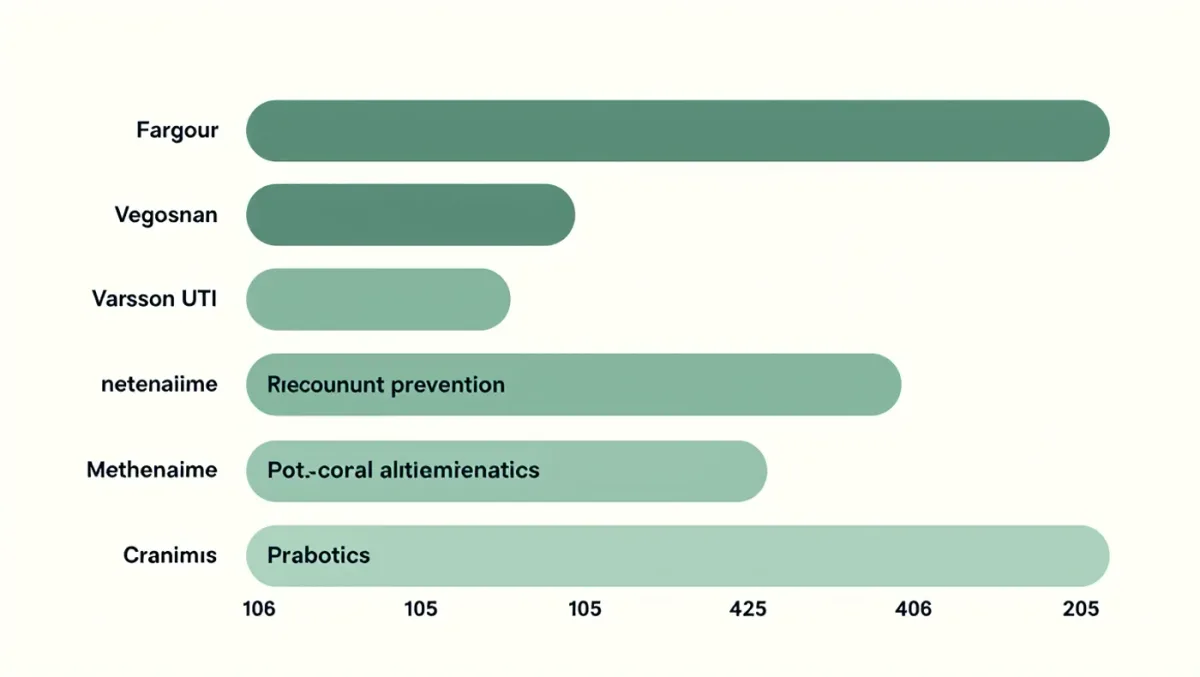
Cranberry earned a long-awaited upgrade in 2023: an updated Cochrane review of 50 trials concluded cranberry products probably reduce the risk of symptomatic, recurrent UTIs in women by about a quarter compared with placebo, per the Cochrane Database of Systematic Reviews. Proanthocyanidins in cranberry appear to block bacteria from adhering to the bladder wall. The honest framing: the effect is real but modest, juice contributes sugar without delivering much proanthocyanidin, and capsules or unsweetened extract are the better delivery form studied in trials. D-mannose, a related sugar with an adhering-blocking mechanism, has promising but still preliminary evidence from smaller trials, and probiotics have produced mixed results so far, per the same review's comparisons.
Which habits matter less than advertised?
A few, which surprises most patients. Postcoital urination — the single most repeated piece of prevention advice — did not significantly lower recurrence in the 2019 JAMA Internal Medicine randomized trial of 180 women with recurrent UTIs. Wiping front to back remains reasonable hygiene recommended by the NIDDK, though observational evidence for it is weaker than assumed. Avoiding baths, skipping bubble bath, and cotton underwear fall into the tradition rather than the trials category. What does deserve real attention: switching off spermicides if you use them, per CDC guidance, and treating constipation, which raises UTI risk especially in children and older adults.
What are the medical options for recurrent UTIs?
When behavioral measures fail, clinicians have several evidence-based tools, per guidance from the American Urological Association's 2019 recurrent UTI consensus statement. Topical vaginal estrogen for postmenopausal women substantially reduces recurrences in randomized trials by restoring lactobacilli and vaginal acidity. Methenamine hippurate, an old antiseptic prodrug, showed comparable recurrence reduction to prophylactic antibiotics in a 2022 JAMA network meta-analysis. Antibiotic prophylaxis — daily low-dose or post-intercourse single-dose — works but carries resistance and side-effect tradeoffs, so guidelines position it as a later step, ideally after a voiding diary documents the true recurrence pattern.
One more practical note belongs here: know your own pattern. Urologists who published the recurrence literature repeatedly emphasize that a simple diary — dates of infections, relation to sex, travel, or new products — changes management more than any single supplement, because it distinguishes true bacterial recurrences from persistent symptoms after treatment, a condition called chronic pelvic pain syndrome that responds to entirely different care, per the American Urological Association statement. If your "recurrent UTI" symptoms are burning without positive cultures, ask about pelvic floor evaluation before accepting another round of antibiotics.
When to talk to a clinician
See a clinician for any suspected UTI with fever above 100.4 F, flank or back pain, nausea, or vomiting — these suggest a kidney infection needing same-day treatment. Book a dedicated prevention visit if you have had two infections in six months or three in a year, the standard threshold for recurrent UTI workup, per the American Urological Association statement. Ask whether your pattern deserves vaginal estrogen, methenamine, or prophylaxis, and mention spermicide use. Blood in the urine during or after infections always needs evaluation rather than assumption.
The bottom line
About half of women will experience a UTI in their lifetime, per the NIDDK, and prevention has genuine evidence behind it: an extra 1.5 liters of daily water cut recurrences nearly in half in a 2018 JAMA Internal Medicine trial, cranberry products modestly reduce risk per the 2023 Cochrane review, and postmenopausal women benefit most from topical vaginal estrogen. Peeing after sex, despite its popularity, failed its randomized trial. Two or more infections in six months is the cue for a prevention-focused clinician visit.