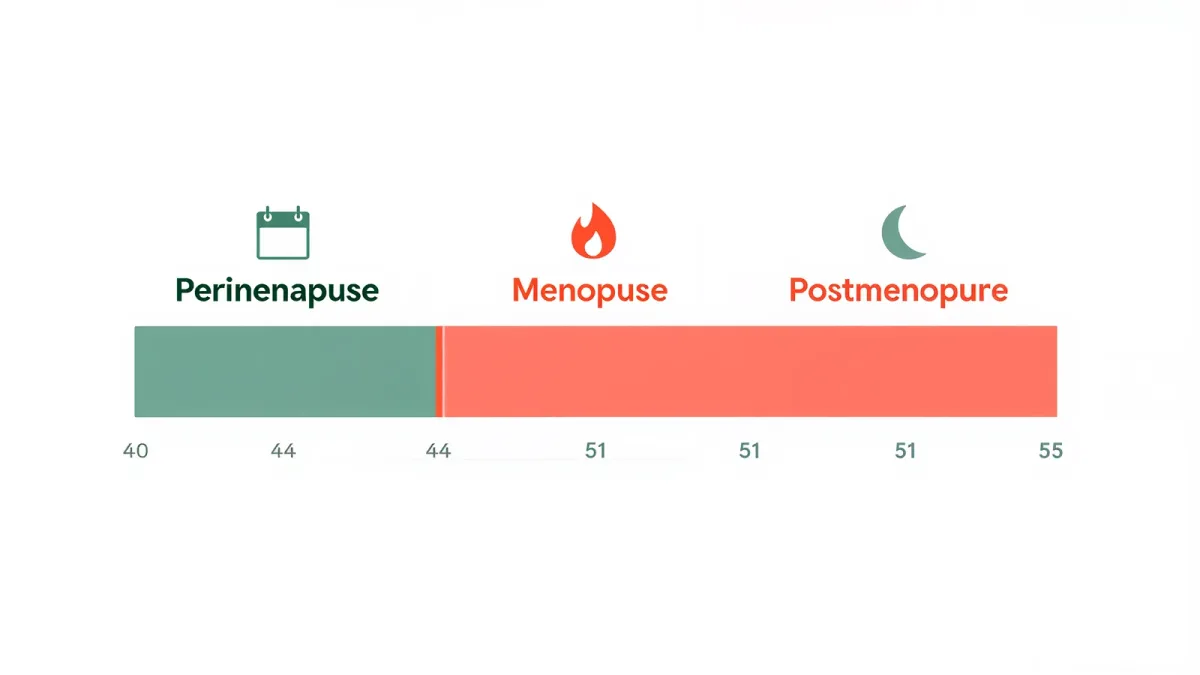
Perimenopause is the transitional phase before menopause, and for most women it begins in the mid-40s and lasts about four to eight years, according to the National Institute on Aging. The core symptoms are irregular periods, hot flashes and night sweats, sleep disruption, vaginal dryness, and mood or concentration changes — the long-running Study of Women's Health Across the Nation found that up to 80 percent of women experience hot flashes at some point during the transition. Menopause itself is officially diagnosed only after 12 consecutive months without a period, per the same NIH institute, which means the years of confusing symptoms before that date are perimenopause, and they deserve their own explanation.
If your symptoms are disrupting daily life, a clinician can walk you through options ranging from lifestyle changes to hormone therapy.
What exactly is happening to my hormones?
Ovarian function becomes irregular rather than switching off. During perimenopause, estrogen rises and falls unevenly and progesterone production becomes erratic as ovulation becomes unpredictable, per the National Institute on Aging. This is why symptoms can feel inconsistent — one month heavy periods and rage-level irritability, the next month almost nothing. The average age of menopause in the United States is 51, per the National Institute on Aging, and smoking is associated with reaching it roughly two years earlier. The transition typically runs four to eight years, with the final one to two years bringing the fastest drop in estrogen and the sharpest symptoms.
Which symptoms are most common?
The Study of Women's Health Across the Nation, which has followed thousands of women through the transition since 1996, documented the typical pattern, per its published findings in journals including JAMA and Menopause:
- Irregular periods. Often the first sign: cycles shorten, lengthen, or skip entirely. Periods every two to three months are common; flooding or cycles shorter than 21 days warrant a call to a clinician.
- Hot flashes and night sweats. Up to 80 percent of women get vasomotor symptoms, per SWAN data, typically lasting from one to ten minutes and often peaking in the late transition.
- Sleep disruption. Night sweats fragment sleep, but SWAN researchers found sleep problems often persist even on sweat-free nights, pointing to independent changes in sleep architecture.
- Mood and memory changes. Irritability, tearfulness, and trouble finding words are common during the transition, per the National Institute on Aging, and women with a history of depression have higher risk of recurrence.
- Vaginal dryness and discomfort. Falling estrogen thins vaginal tissue over time; unlike hot flashes, these genitourinary symptoms tend to persist after menopause rather than resolve.
- Body changes. SWAN data show average weight gain of about 1.5 pounds per year through midlife, with fat shifting toward the abdomen even without total weight change.
How do I know it is perimenopause and not something else?
Symptom pattern plus age does most of the work, and blood tests confirm surprisingly little. Follicle-stimulating hormone levels fluctuate day to day during perimenopause, so a single FSH blood test cannot reliably distinguish the transition from normal cycles, per the National Institute on Aging. Clinicians diagnose by reviewing menstrual changes, symptoms, and age, and by ruling out look-alikes: thyroid disease, pregnancy, and heavy bleeding from polyps or fibroids. If you track your cycle and symptoms in a calendar or app for two to three months, that record often shortens the diagnostic conversation considerably.
What actually helps?
The strongest evidence belongs to estrogen-based hormone therapy, which is considered the most effective treatment for hot flashes and night sweats, per the American College of Obstetricians and Gynecologists. For women who cannot or prefer not to use hormones, options studied in randomized trials include low-dose paroxetine — the only nonhormonal medication FDA-approved for moderate to severe hot flashes — plus gabapentin for night sweats and cognitive behavioral therapy, which the North American Menopause Society's 2023 position statement recognizes as helpful for sleep and mood during the transition. For everyday relief, layered breathable bedding, regular aerobic exercise, limiting alcohol and caffeine in the evening, and carrying a cold drink to meetings all show up in patient guidance from the NIH. Vaginal moisturizers and low-dose vaginal estrogen address dryness directly, per ACOG.
Does perimenopause affect bone and heart health?
Yes, which is why the transition is a good checkpoint rather than just an inconvenience. Bone density declines fastest in the final years before menopause, when estrogen falls sharply, per the National Institute on Aging, and the same hormone shift is linked with rising LDL cholesterol and blood pressure in SWAN follow-up studies. Clinicians often use this window to update baseline screening — blood pressure, lipids, and in some cases a bone density scan — so that changes are caught while lifestyle measures still move the numbers.
When to talk to a clinician
See a clinician for periods that are much heavier than usual, last longer than seven days, arrive less than 21 days apart, or include clots the size of a quarter — these are not typical perimenopause and need evaluation, per the National Institute on Aging. Also seek care for bleeding between periods or after sex, hot flashes that stop you sleeping or working, or new depressive symptoms. Ask specifically about hormone therapy: many women who could benefit are never offered it because of outdated fears traced to a 2002 reanalysis of the Women's Health Initiative data.
The bottom line
Perimenopause typically starts in the mid-40s, runs four to eight years, and ends only after 12 period-free months, per the National Institute on Aging. Irregular cycles, hot flashes, sleep disruption, and mood changes affect most women — up to 80 percent get hot flashes, per SWAN research — and help ranges from hormone therapy, the most effective option per ACOG, to CBT and lifestyle measures. Track your symptoms for a few months, then bring the record to a clinician.