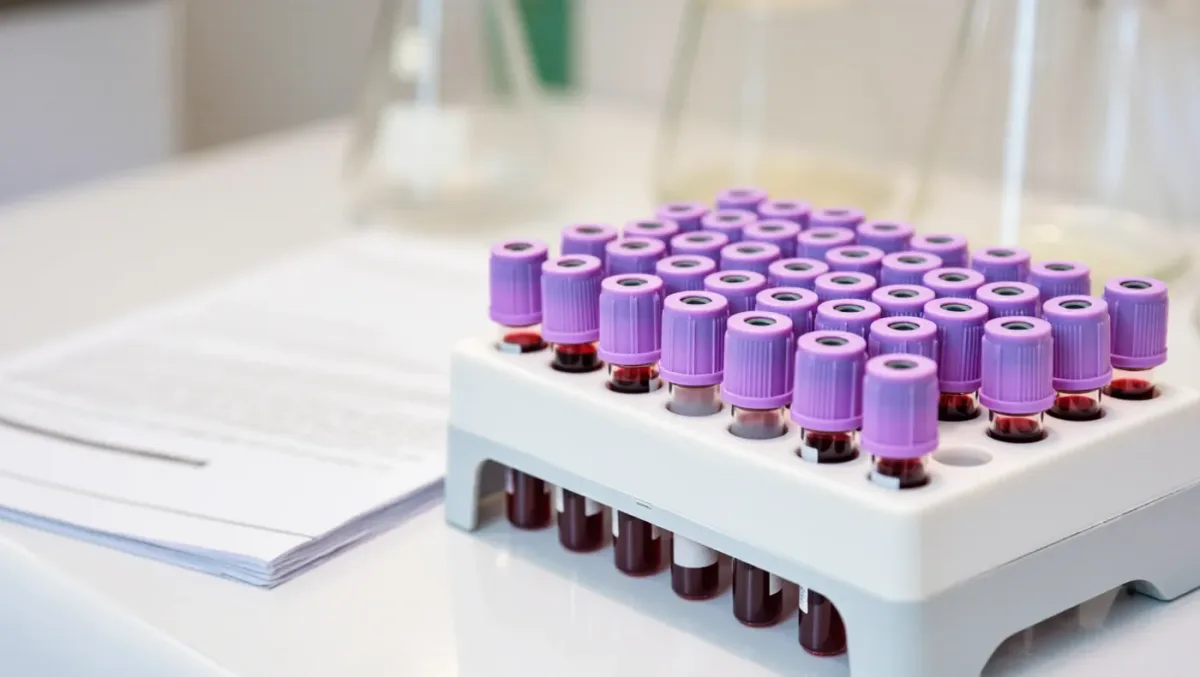

The thyroid blood test you will almost always see first is TSH — thyroid-stimulating hormone — and it is considered the most sensitive initial marker of thyroid function because it changes early and reliably when the gland falters, per the National Institute of Diabetes and Digestive and Kidney Diseases. Most labs define a normal TSH reference range of roughly 0.4 to 4.0 mIU/L, though exact cutoffs vary from lab to lab, per the same NIH institute. A high TSH usually points to an underactive thyroid (hypothyroidism); a low TSH suggests an overactive one (hyperthyroidism). If TSH is abnormal, clinicians typically add a free T4 test before making any diagnosis.
Interpretation of thyroid results depends heavily on your age, pregnancy status, and symptoms, so a lab report should always be reviewed with a clinician who knows your history.
Why do women's thyroid results matter so much?
Because thyroid disease is overwhelmingly a women's health issue. About 5 in 100 Americans aged 12 and older have hypothyroidism, and women are far more likely than men to develop it, per NIDDK estimates; the American Thyroid Association puts women's lifetime risk at roughly one in eight. Hormonal milestones raise the stakes further: pregnancy changes thyroid hormone requirements, and postpartum thyroiditis — temporary thyroid inflammation after childbirth — affects up to 10 percent of women in the first year postpartum, per the American Thyroid Association. Hypothyroid symptoms read like a slow-motion hangover: fatigue, cold intolerance, dry skin, constipation, weight gain, heavier periods, and low mood. Hyperthyroidism runs hot instead — racing heart, heat intolerance, tremor, weight loss, and anxiety.
What does each test in the panel measure?
Four measurements do most of the work, per the NIDDK and NIH MedlinePlus:
- TSH — made by the pituitary, not the thyroid; it rises when the gland underperforms and falls when it overperforms, working like a thermostat reading
- Free T4 — the active thyroid hormone circulating unbound; low with high TSH confirms hypothyroidism, high with low TSH confirms hyperthyroidism
- T3 — sometimes added for hyperthyroidism, which can raise T3 earlier than T4
- Thyroid antibodies (TPOAb) — detect the autoimmune attack behind Hashimoto's and, less commonly, Graves' disease; positive antibodies with normal hormone levels suggest elevated future risk rather than current disease
What is a normal result, and why can it differ between labs?
Reference ranges are calculated from the local testing population, so the numbers printed on your report can shift by tenths between laboratories, per NIH MedlinePlus. The widely cited TSH range of about 0.4 to 4.0 mIU/L is a convention, not a wall: results just above the upper limit with normal T4 and no symptoms are labeled subclinical hypothyroidism, and a 2022 JAMA Internal Medicine meta-analysis found most mild cases in adults do not progress quickly, which is why watchful waiting with repeat testing is common. Age matters too — some endocrine groups argue the upper limit rises modestly in older adults. This is exactly why the report says "reference range" and not "healthy range," and why one number out of context rarely means what it seems to.
Should you fast, and when should you test?
No fasting is needed for thyroid tests, per NIH MedlinePlus, but timing relative to biotin supplements does matter: high-dose biotin, a popular hair and nail supplement, can falsely distort both TSH and hormone results, and the FDA issued a 2017 safety communication warning about the interference. Clinicians generally suggest pausing biotin for at least two days before testing, per the FDA communication, and testing at the same time of day if you are tracking levels over time — TSH naturally peaks overnight and dips in the afternoon. Estrogen-containing birth control and pregnancy also raise the T4-binding protein, which is why pregnant women have their own trimester-specific reference ranges.
How often should results be rechecked?
It depends on the finding. Stable, treated hypothyroidism is typically monitored with TSH every six to twelve months, per the American Thyroid Association's 2014 hypothyroidism guidelines, while a newly started levothyroxine dose is rechecked after six to eight weeks, when the level reaches a new steady state. Mildly abnormal results with no symptoms are usually repeated in six to twelve weeks before any treatment decision, because transient spikes after illness or stress are common. A single abnormal result without a confirming repeat — or without symptoms — is rarely the end of the story.
When to talk to a clinician
Bring your results to a clinician if TSH falls outside the printed reference range and you have matching symptoms, if you are pregnant or planning pregnancy with any thyroid history, if you have a family history of autoimmune thyroid disease with new fatigue or weight changes, or if you take biotin supplements and are due for testing. Seek care promptly for a racing heartbeat, chest pain, severe tremor, or dramatic unexplained weight loss, which can signal significant hyperthyroidism.
The bottom line
TSH is the sensitive first-line thyroid test, with a typical reference range of about 0.4 to 4.0 mIU/L depending on the laboratory, per the NIDDK; free T4 completes the picture and antibodies explain the cause. Women carry most of the risk — roughly one in eight will develop a thyroid disorder in her lifetime, per the American Thyroid Association. Get abnormal results repeated, pause high-dose biotin before testing per the FDA's 2017 advisory, and interpret every number with a clinician rather than a search engine.