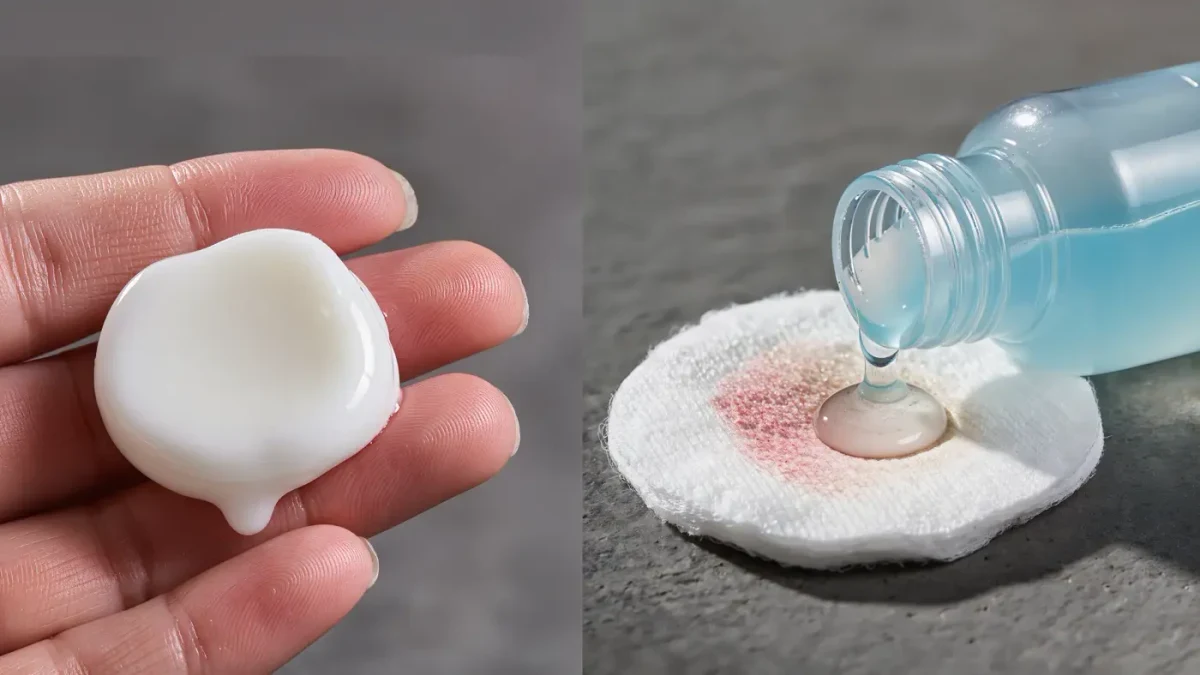
Not for most people. Double cleansing — an oil-based cleanser followed by a water-based one — is a sensible way to remove heavy makeup and stubborn sunscreen, but no published clinical trial has compared it against a single gentle cleanse for skin outcomes, and dermatology guidance emphasizes that gentle cleansing, whatever the count, is what protects your barrier. If you wear little or no makeup, one careful wash is enough.
If you have rosacea, eczema, or persistent irritation from any cleanser, check with a dermatologist before changing your routine.
What is double cleansing, exactly?
The routine comes from Japanese and Korean skin care traditions and has two steps. First, an oil-based cleanser or cleansing balm dissolves oil-soluble debris — makeup, sunscreen filters, sebum. Second, a water-based cleanser rinses away the residue plus water-soluble sweat and grime. The logic is chemistry, not luxury: oils dissolve in oils, so a second product with a different base can pick up what the first left behind.
What does the evidence actually say?
Here is the honest core: there is no direct comparative trial. Double cleansing has not been tested against single cleansing in a randomized study measuring outcomes like acne severity, barrier function, or irritation — the evidence you would want for a 'necessary' label. What the literature does support is the surrounding logic:
- Complete makeup and sunscreen removal matters. Dermatologists routinely see acne-like breakouts along the hairline and jaw from product buildup — the American Academy of Dermatology advises removing makeup fully before bed.
- Barrier damage from over-cleansing is real. Research on cleansing and the skin barrier — including a 2018 review by Tobias Kueper and colleagues in Dermatology and Therapy — shows that harsh or frequent cleansing can strip lipids, raise skin pH, and increase water loss and irritation.
- Gentleness beats frequency. The same barrier literature supports lukewarm water, short contact time, and mild surfactants — rules that apply to one cleanse or two.
So double cleansing sits in the evidence gap between those two facts: good reasons to believe it helps on heavy-makeup days, no proof it helps — and some risk it harms — on bare-skin days.
Who benefits most from double cleansing?
- Wearers of long-wear makeup or waterproof sunscreen. Modern sunscreens and foundations are deliberately water-resistant; an oil step dissolves them without scrubbing.
- Heavy users of sunscreen — which should be everyone. If you apply broad-spectrum SPF 30 daily per dermatology guidance, an evening oil cleanse is a low-friction way to ensure it comes off.
- Very oily skin with heavy sebum and product load. Some oily-skin users find the evening double cleanse keeps overnight congestion down.
Who should skip it?
Dry, sensitive, or rosacea-prone skin often does better with one gentle cleanse — the second pass removes lipids the barrier would rather keep. The 2018 Kueper review in Dermatology and Therapy noted that even gentle surfactant systems cause measurable, if subtle, protein and lipid removal with each wash; doubling the passes doubles the exposure. If your skin feels tight, squeaky, or flushed after cleansing, that is a signal, not cleanliness.
How do you do it without damaging your skin?
- Use lukewarm water — hot water strips lipids and increases irritation, per barrier research.
- Massage the oil cleanser for 30 to 60 seconds, then rinse; do not let it sit.
- Follow with a mild, low-pH water-based cleanser only where needed — many people use it on the T-zone alone.
- Pat dry and apply moisturizer within a few minutes while skin is still damp.
- Double cleanse at night only; mornings need, at most, a water rinse for most skin types.
If you use a cleansing balm or micellar water, check whether it needs rinsing: micellar formulas are designed to be left on, per product chemistry reviews, while balms generally emulsify and rinse off.
Is micellar water a substitute?
Partly. Micellar water uses mild surfactants suspended in soft water to lift makeup and oil without rinsing. It removes light makeup decently and is kinder than wipes, but residue remains on skin — the American Academy of Dermatology advises following micellar use with a rinse or gentle cleanser when you have worn substantial makeup or sunscreen. For daily SPF removal, treat micellar water as step one, not the whole job.
What are the signs you are over-cleansing?
Tightness after washing, increased flaking, stinging when you apply normal products, new sensitivity to actives, or paradoxically more oil — skin can respond to a stripped barrier with rebound sebum production, per the barrier-function literature summarized in the Kueper review. The fix is subtractive: drop a cleanse, drop the heat, drop the lather before you add anything.
How does double cleansing fit with actives?
If your evening routine includes retinol or acid exfoliants, the sequencing matters: cleanse fully, dry the skin, then apply the active. Using a strong acid on skin that still carries cleanser residue and water film changes both comfort and absorption. And if you double cleanse on retinol nights, keep both cleansers mild — the 2018 barrier research suggests that cumulative stripping, not any single product, is what pushes skin into irritation. People using prescription retinoids often double cleanse less in winter, when dryness narrows the margin.
When to talk to a clinician
See a dermatologist if cleansing leaves you red and stinging regardless of product, if you have persistent bumps along the hairline or jaw despite good removal habits, or if you manage a condition like rosacea that flares with washing.
The bottom line
Double cleansing is a tool, not a requirement: no trial has proven it superior to a single gentle wash, but it is the most comfortable way to remove waterproof sunscreen and long-wear makeup, and barrier research from the 2018 Dermatology and Therapy review shows why gentleness matters more than step count. On bare-skin days, one mild cleanse is enough — your barrier will thank you.