Yes — retinol works, but not overnight and not without patience. Prescription tretinoin has the strongest evidence, improving fine wrinkles and skin texture in randomized trials over 12 to 24 weeks, and a 2007 study in Archives of Dermatology found that 0.4 percent retinol, the weaker over-the-counter form, measurably improved fine wrinkles in older adults after 24 weeks of use. Expect months, not days.
This site publishes information, not medical advice. If you have a skin condition such as eczema or rosacea, take prescription medication, or are pregnant, talk with a clinician before adding retinol to your routine.
What is retinol, exactly?
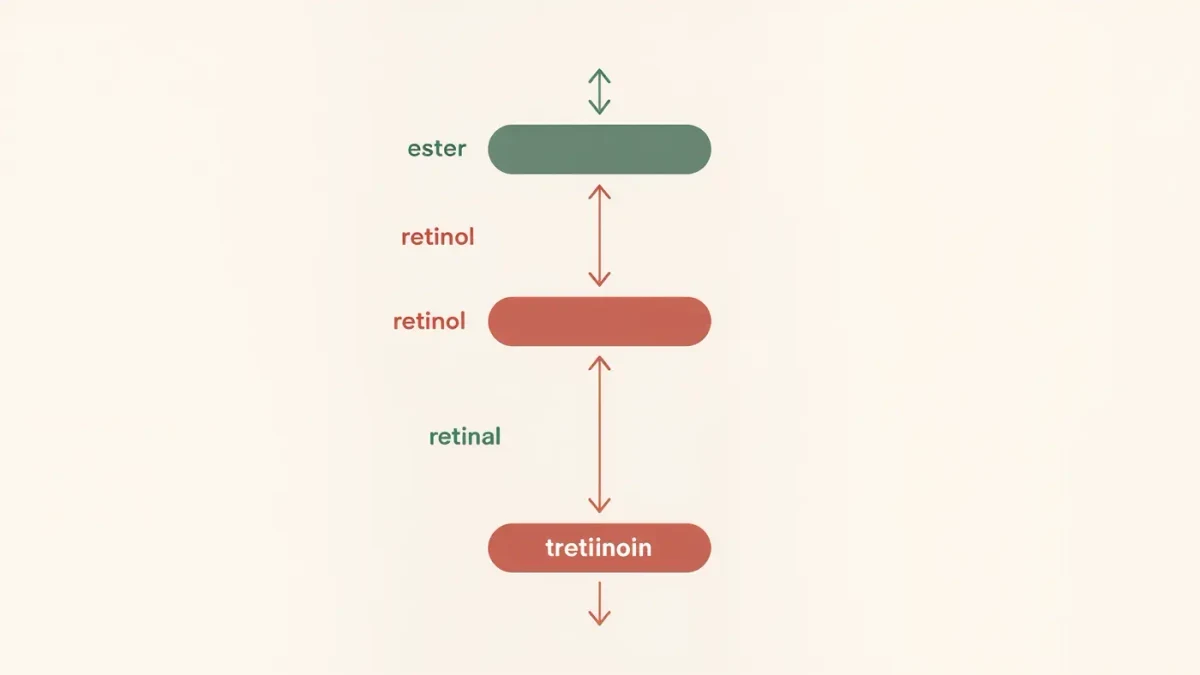
Retinol is a retinoid — a vitamin A derivative. It sits at the weaker end of a family that also includes prescription tretinoin (retinoic acid) and retinaldehyde. Your skin has to convert retinol into retinoic acid before it does anything, which takes several enzymatic steps. That conversion is why retinol acts more slowly and more gently than tretinoin, which skips the conversion entirely.
How does it change skin?
Retinoids speed up cell turnover and stimulate dermal repair. In the 2007 Archives of Dermatology study led by Ranella Kafi and colleagues, 0.4 percent retinol used three times a week for 24 weeks reduced fine wrinkles and increased glycosaminoglycans — molecules that support skin's cushioning — in skin samples taken from participants. The researchers attributed the changes to retinoid-driven activation of repair pathways that aging had quieted down.
Prescription tretinoin has an even longer paper trail. Albert Kligman's team reported in the Journal of the American Academy of Dermatology in 1986 that tretinoin improved photoaged skin, and dozens of controlled trials since then have confirmed fine-wrinkle improvement over 16 to 24 weeks. The FDA cleared tretinoin for photoaging in the mid-1990s.
Does retinol work as well as prescription tretinoin?
Not quite — but it is not nothing. Head-to-head data are limited, and much of what exists comes from industry-sponsored comparisons. The honest summary: tretinoin has the deepest evidence base, retinaldehyde is intermediate, and retinol is the best-studied of the over-the-counter forms thanks to the Kafi trial. Retinyl palmitate and other esters appear to be the weakest, with the least convincing published data. If your main goal is proven results and you can tolerate a prescription, tretinoin leads; if you want to start gentler, retinol is a reasonable entry point.
What can retinol not do?
Retinoids are not erasers. Trials show improvement in fine wrinkles, mottled pigment, and roughness — not a reversal of deep static lines or significant sagging, which involve volume and structure that creams cannot rebuild. The Kafi trial measured modest, visible change, not transformation. Any product promising retinol will 'erase' wrinkles is promising more than the studies deliver.
How do you start without wrecking your skin?
Most people experience some dryness, peeling, and redness in the first weeks — dermatologists call this retinization, and it usually settles as skin adapts. The American Academy of Dermatology advises starting slowly rather than daily. A practical sequence:
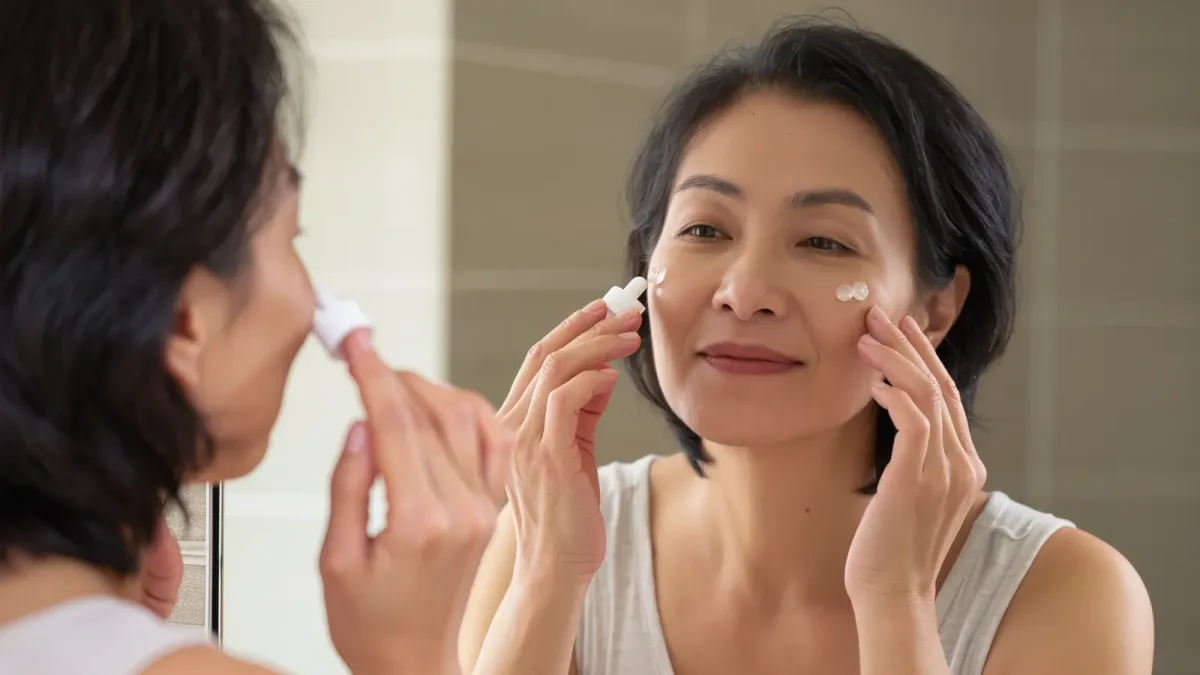
- Use a pea-sized amount for the whole face, at night, on dry skin.
- Start two nights a week and increase gradually over several weeks.
- Moisturize after applying, or sandwich the retinol between two layers of moisturizer if you are sensitive.
- Wear broad-spectrum sunscreen every morning — retinoids can increase sun sensitivity, and photoaging is what you are treating in the first place.
Skip retinol on nights you use strong acids or benzoyl peroxide until you know how your skin reacts; per the American Academy of Dermatology's current patient guidance, irritation is the most common reason people quit early.
Which form and strength should you choose?
Over-the-counter retinol typically comes in 0.1 to 1 percent concentrations. Stronger is not automatically better — the 2007 Archives of Dermatology results came from just 0.4 percent — and irritation scales with strength and frequency. Here is how the family lines up:
| Retinoid | Availability | Evidence depth | Typical tolerance |
|---|---|---|---|
| Retinyl esters (palmitate, acetate) | Over the counter | Weakest published data | Very gentle |
| Retinol (0.1-1%) | Over the counter | Randomized trial data, including Kafi 2007 | Moderate |
| Retinaldehyde (0.05-0.1%) | Over the counter | Intermediate; smaller trials | Moderate |
| Tretinoin (0.025-0.1%) | Prescription | Deepest — trials since 1986, FDA-cleared for photoaging | Strongest irritation risk |
Per the American Academy of Dermatology's patient guidance, starting with a lower strength and building frequency matters more than chasing the highest percentage on the label.
When do you see results?
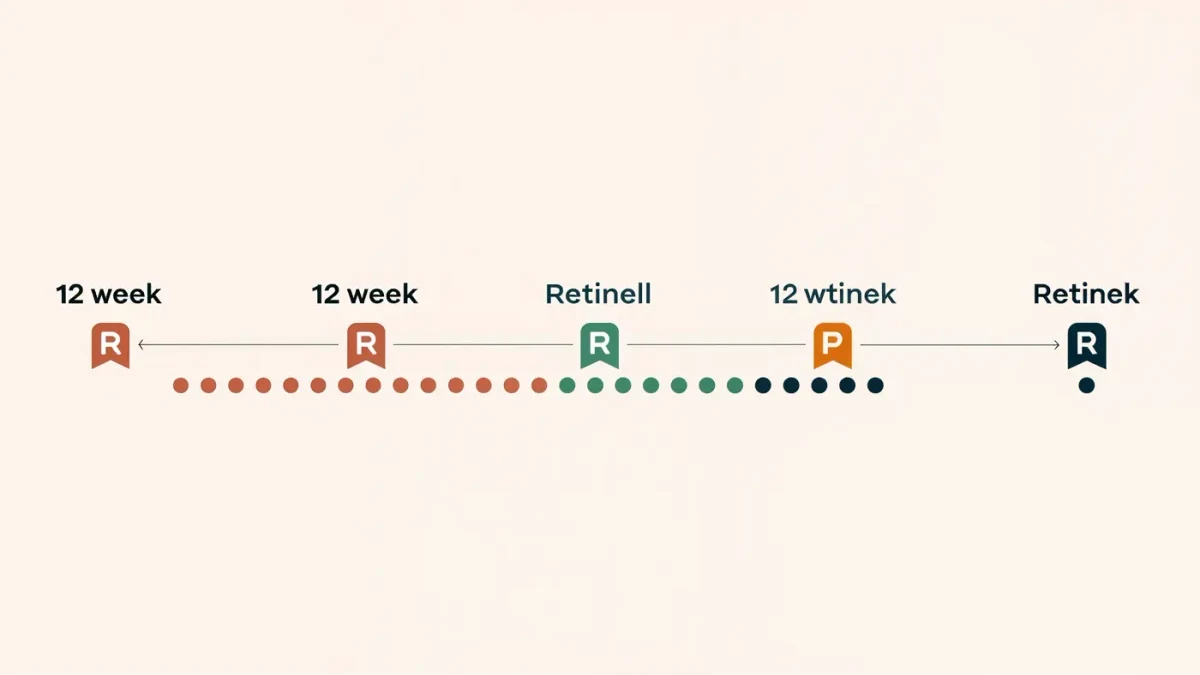
Plan on 12 weeks minimum, with the best trial data at 24 weeks. The Kafi study saw measurable changes at 24 weeks, and tretinoin trials typically report peak improvement between 16 and 24 weeks. A product that has not done anything after three months may simply not have been given enough time — but if you are using it sporadically, the clock is barely running.
When to talk to a clinician
See a dermatologist if you have persistent redness, burning, or peeling that does not settle within a few weeks, if you have active eczema or rosacea, or if you are pregnant or planning pregnancy — retinoid use in pregnancy is a question for your obstetric clinician, and oral retinoids are firmly off the table.
The bottom line
Retinol is one of the few over-the-counter ingredients with randomized-trial evidence behind it: 0.4 percent retinol improved fine wrinkles in a 2007 Archives of Dermatology study over 24 weeks, and prescription tretinoin has decades of confirming trials. Start low, go slow, wear sunscreen daily, and judge results at the three-month mark — not the third week.