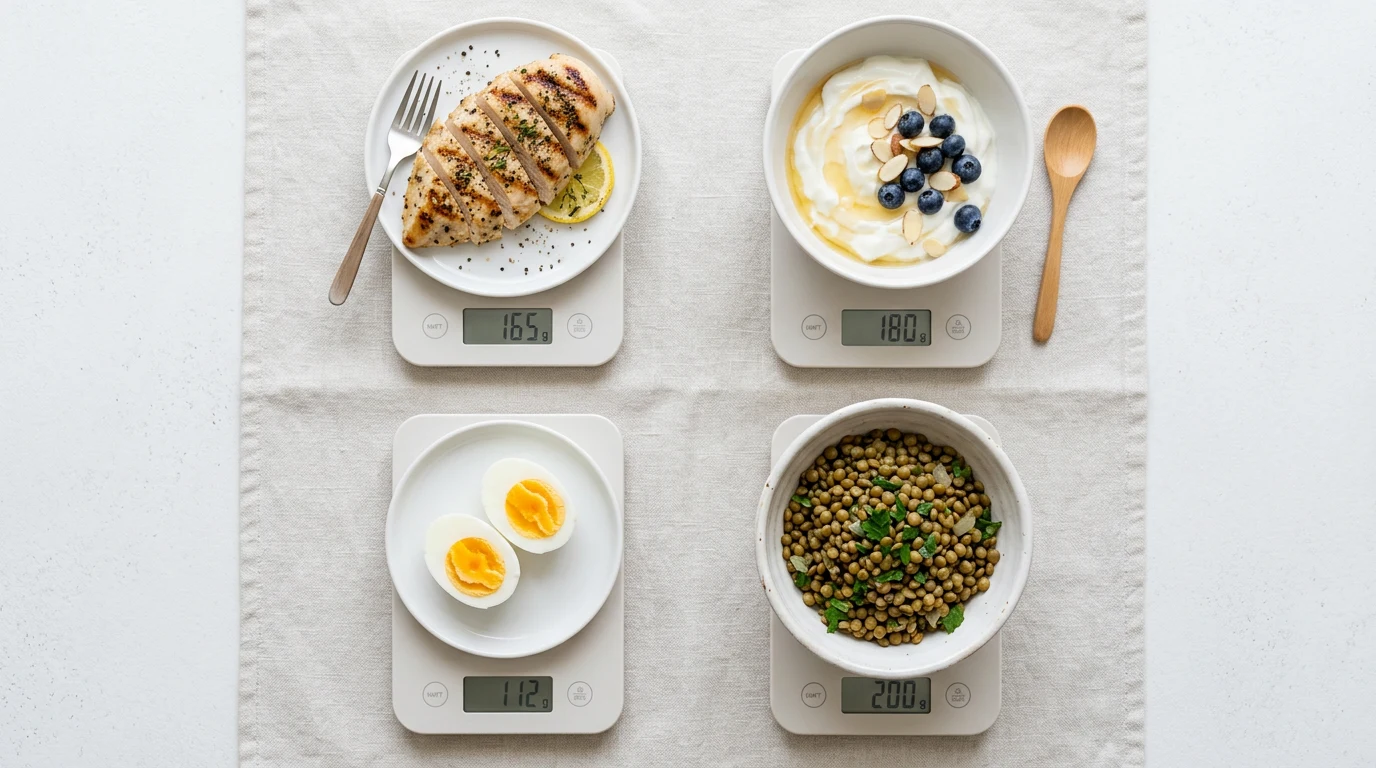
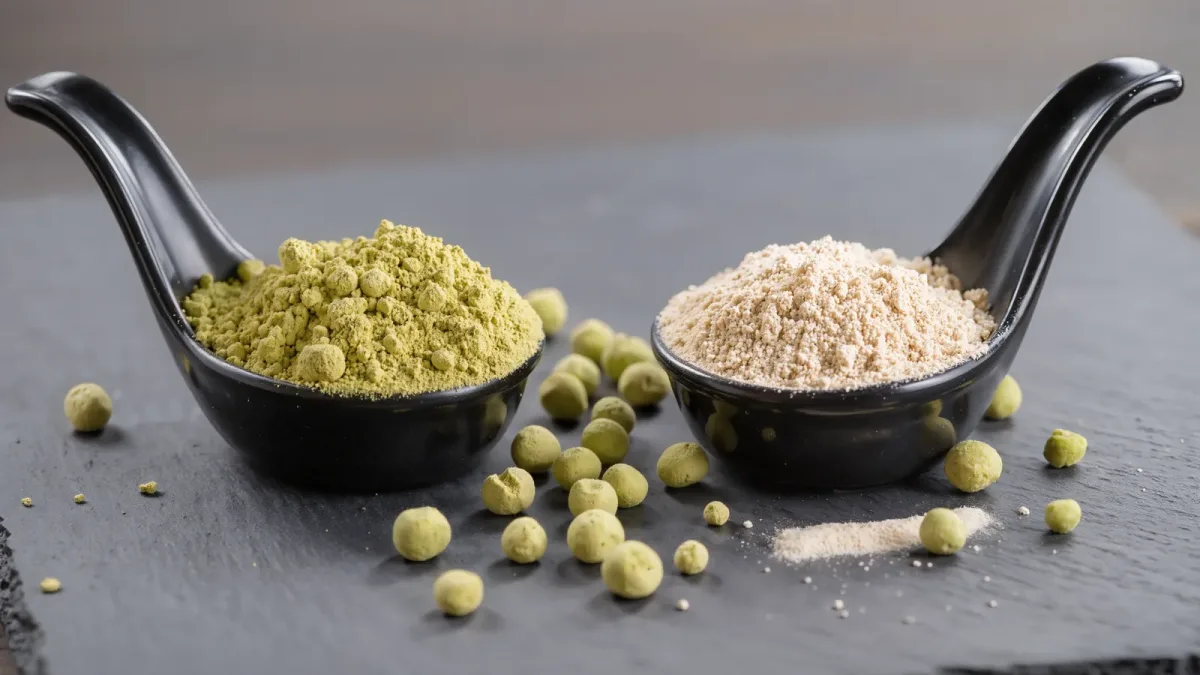
For building muscle, the best matched trials to date find no meaningful difference between plant protein and whey when total daily protein is adequate: a 2021 study in Sports Medicine followed 38 men doing 12 weeks of resistance training and found similar gains in muscle size and strength between habitual vegans and omnivores eating protein-matched diets, and a 2022 trial in The Journal of Nutrition measured the same muscle-building response to 30 grams of a wheat-corn-pea blend as to 30 grams of milk protein. Whey still holds the edge in one narrow sense: a single scoop delivers more leucine, the amino acid that most triggers muscle protein synthesis.
If you have kidney disease, gout, or food allergies, protein choices belong in a conversation with your clinician or dietitian.
Why did people think plant protein was inferior?
The concern had a legitimate basis. A widely cited 2015 review by Stefan van Vliet and colleagues in The American Journal of Clinical Nutrition summarized the earlier evidence: many single plant proteins contain less leucine per gram than whey, are somewhat less digestible, and are incomplete on their own, with grains low in lysine and legumes low in methionine. Earlier studies also found that isolated plant proteins produced a smaller short-term muscle protein synthesis response than equivalent doses of animal protein. Whey, a protein fraction separated from milk during cheese-making, is particularly rich in leucine and absorbs quickly, which is why it became the reference standard.
What changed is the research design. Instead of comparing single protein sources in isolation, researchers began matching total protein and testing complete training outcomes, which is the comparison that matches how people actually eat.
What do the matched trials show?
The two most useful recent studies both controlled for total protein, and both found the gap disappear.
- The Sports Medicine trial (2021), by Victoria Hevia-Larrain and colleagues in Sao Paulo, put 19 habitual vegans and 19 omnivores through 12 weeks of resistance training with protein intakes matched at roughly 1.6 to 1.8 grams per kilogram of body weight per day. Lean mass and strength gains did not differ significantly between groups.
- The Journal of Nutrition trial (2022), by Daan Pinckaers and colleagues at Maastricht University, compared muscle protein synthesis after 30 grams of milk protein against 30 grams of a plant blend of wheat, corn, and pea in healthy young men and found no significant difference.
The pattern behind both results: protein quality matters most when total protein is low. At intakes near the RDA for protein, 0.8 grams per kilogram per day set by the Institute of Medicine in 2005, a mixed plant diet built from varied sources closes the amino acid gaps that single plant proteins have.
Is whey still better for a single shake?
Per serving, modestly. Whey supplies roughly 10 to 12 percent leucine by weight against around 7 to 8 percent for pea protein, per the amino acid profiles reviewed in the 2015 American Journal of Clinical Nutrition paper, so a smaller scoop of whey reaches the leucine amount associated with a maximal muscle-building signal. That is the honest pro-whey case. Two practical counterpoints from the same body of evidence: blending plant proteins, as the 2022 Journal of Nutrition trial did, restores the amino acid balance, and simply increasing the plant serving raises leucine along with total protein.
Which digests better, and which sits easier?
Whey absorbs faster and is marginally more digestible, per the 2015 review, which matters most in the hour after training rather than across a full day of eating. Digestive comfort runs the other way for some people: whey contains lactose, so adults with lactose intolerance, a condition the NIH estimates affects a large share of the world's adults, may prefer a whey isolate with reduced lactose or a plant powder entirely. Pea and soy powders cause bloating in some users, an individual tolerance question rather than a quality verdict.
What about soy specifically?
Soy is the one plant protein that is complete on its own, containing all essential amino acids at useful levels, per the 2015 American Journal of Clinical Nutrition review. Concerns about soy lowering testosterone have not held up in controlled research: a 2021 systematic review and meta-analysis of clinical trials published in Reproductive Biology and Endocrinology found no significant effect of soy protein or isoflavones on total or free testosterone in men.
How should you choose between them?
Because the outcome evidence is a tie at matched intakes, the decision is practical rather than physiological:
- Choose whey if you tolerate dairy, want the smallest scoop with the highest leucine, and like the texture. Isolates suit people with lactose sensitivity better than concentrates.
- Choose a plant blend if you eat vegan or dairy bothers you, and look for pea or soy combined with a grain protein rather than a single source.
- Either way, the powder is the smallest variable in the equation: total daily protein and the training itself decide results, per the 2021 Sports Medicine trial.
The bottom line
Whey delivers more leucine per scoop, but head-to-head trials with matched protein intake, published in Sports Medicine in 2021 and The Journal of Nutrition in 2022, found plant protein equal to whey for building muscle and strength, and a 2015 review explains why single plant proteins fall short while blends do not. The sensible step is to pick the powder you digest well and can take consistently, keep total daily protein within the range a registered dietitian confirms for you, and put the remaining attention into the training program rather than the label.