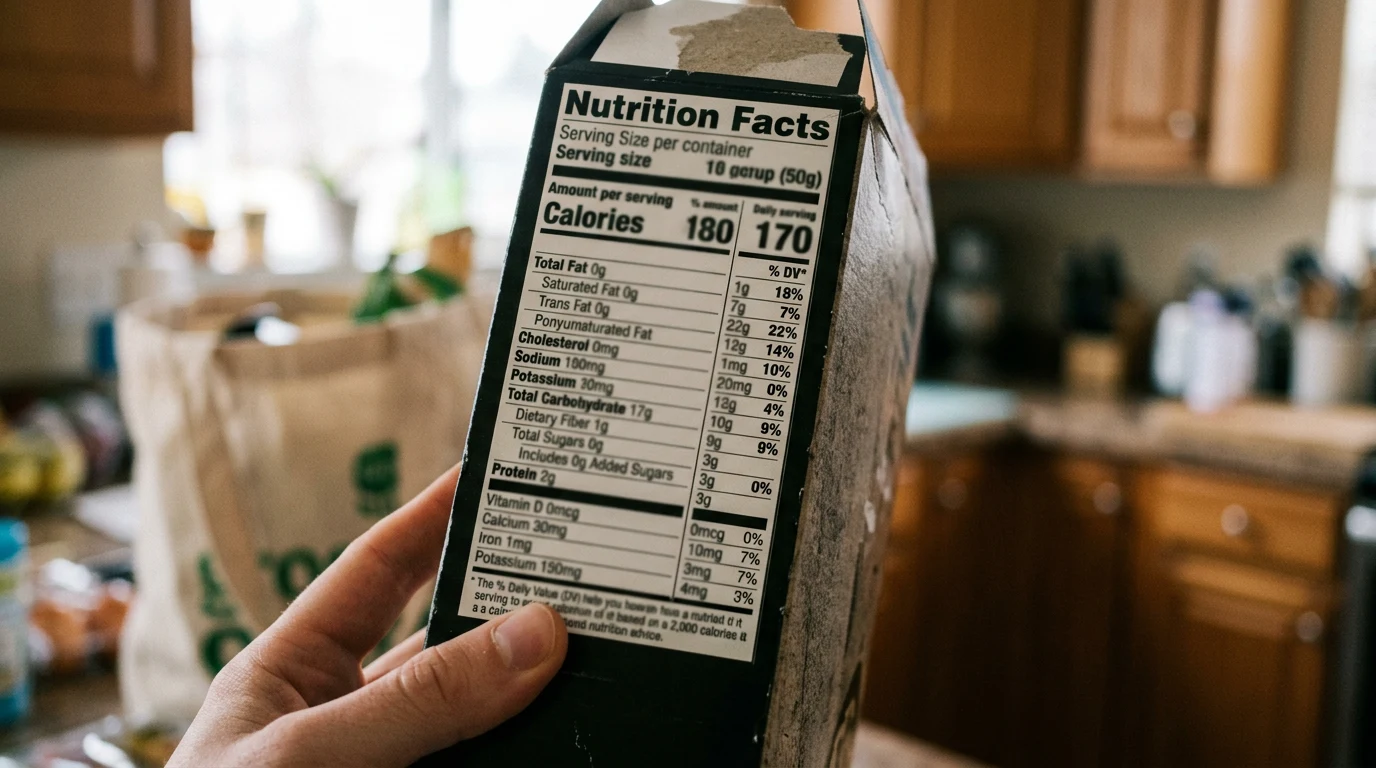

You can read a nutrition label in three steps: check the serving size first, because every number on the panel refers to one serving and not the package; use the Percent Daily Value column next, where per the FDA 5 percent or less counts as low and 20 percent or more counts as high for any nutrient; then skim the ingredient list, which by FDA regulation is ordered by weight from most to least. Done in the right order, the label answers the question that actually matters: what am I getting per serving, and is that a lot or a little?
If you are managing a condition such as diabetes, high blood pressure, or kidney disease, a registered dietitian can turn these label skills into numbers specific to you.
Why does serving size come first?
Because the entire panel is scaled to it. A bag of chips or a bottle of soda often holds two and a half or more servings, so the 250 calories printed on the front can quietly become 700 in the bag, per the FDA's guide to the Nutrition Facts label. This matters more than it used to: as part of its 2016 update to the label, finalized in May 2016 and required on most packaged foods by 2020 or 2021 depending on manufacturer size, the FDA changed serving sizes to reflect what people actually eat and drink in one sitting, so a 20-ounce soda now lists as one serving rather than the older 8-ounce convention.
What do the Percent Daily Values mean?
The % Daily Value column shows how much one serving contributes to a day's worth of each nutrient, calculated against reference values set by the FDA. Most Daily Values are based on a 2,000-calorie diet, which the label itself notes is a general guide, not a personal target; individual calorie needs vary with age, sex, size, and activity. The practical shortcut comes from the FDA's own guidance:
- 5% DV or less per serving is considered low for that nutrient.
- 20% DV or more per serving is considered high.
The trick is applying the shortcut in the right direction. Per the Dietary Guidelines for Americans 2020-2025, you want 20 percent or more for nutrients most people under-consume, such as dietary fiber, vitamin D, calcium, potassium, and iron, and you want 5 percent or less for the ones the Guidelines flag as over-consumed: added sugars, sodium, and saturated fat.
Which numbers should you check first?
The Dietary Guidelines for Americans 2020-2025 name added sugars, sodium, and saturated fat as the dietary components of public health concern, so those three deserve your first glance. The reference values per the FDA and the Guidelines, for a 2,000-calorie day:
| Component | Daily Value | Why it is flagged |
|---|---|---|
| Added sugars | 50 g | Excess intake is linked to higher risk of type 2 diabetes and obesity, per the 2020-2025 Dietary Guidelines |
| Sodium | 2,300 mg | High intake is associated with elevated blood pressure, per the Dietary Guidelines |
| Saturated fat | 20 g | Replacing it with unsaturated fat supports healthy blood cholesterol, per the Dietary Guidelines |
Added sugars are the newest entry: the FDA's 2016 rule made them mandatory on the label, separate from naturally occurring sugars in fruit or milk, so you can tell that a flavored yogurt's sugars are not the same as plain yogurt's. A practical example: if a granola bar lists 12 grams of added sugar, that is 24 percent of the Daily Value in one small snack, well past the FDA's high threshold.
What is the ingredient list telling you?
By FDA regulation, ingredients are listed in descending order by weight, so the first two or three items are what the product mostly is. Two habits make the list useful. First, look for sugar under its many names: per the FDA, ingredients such as corn syrup, honey, dextrose, and fruit juice concentrate all count as added sugars. Second, watch for the long lists of isolates and cosmetic additives, such as protein isolates, modified starch, artificial colors, and flavor enhancers, which are hallmarks of the ultra-processed category researchers classify under the NOVA system.
What about the other rows on the label?
Trans fat, listed in grams, is worth a scan: per the FDA, most artificial trans fat was phased out of the US food supply after the agency's 2015 determination that partially hydrogenated oils were no longer generally recognized as safe, so a nonzero number usually comes from small amounts in animal products. Cholesterol and total carbohydrate rows matter less than the sub-lines: dietary fiber under carbohydrate, because per the Dietary Guidelines more than 90 percent of women and 97 percent of men miss the fiber target, and the micronutrient rows, where the 2016 label update added vitamin D and potassium and made vitamins A and C optional.
Does the front of the package count for anything?
Treat front-of-package claims as marketing to verify, not information to trust. Per FDA regulations, phrases like "low sodium," "high in fiber," and "light" have defined legal meanings tied to specific thresholds, but "natural" and "multigrain" have no strict definition that guarantees what shoppers assume. The back panel is where the verifiable numbers live, which is why the label-reading order above starts there and ends there.
The bottom line
Serving size, % Daily Value, ingredient list: that order turns any nutrition label from a wall of numbers into a 20-second decision, using the FDA's own 5-and-20 percent rule and the components the Dietary Guidelines for Americans 2020-2025 flag, added sugars, sodium, and saturated fat, as the ones to keep low. Next time you pick up a packaged food, check the serving size against what you will actually eat, then run one calculation: the added-sugar or sodium % Daily Value per serving you are really having.