Most people with knee pain can and should keep exercising: the 2019 guideline from the American College of Rheumatology and the Arthritis Foundation (Kolasinski and colleagues) gives exercise a strong recommendation as first-line treatment for knee osteoarthritis, the most common form of knee pain in adults over 50. The practical formula is low-impact movement, progressive quadriceps and hip strengthening, and a pain rule that allows mild discomfort but never sharp or worsening pain. Rest alone does not rebuild the muscle that supports the knee — and unsupported knees hurt more.
This site publishes information, not medical advice. Knee pain has many causes, and some need a clinician before you train — see the red-flag list below.
Doesn't exercise wear out painful knees?
The evidence points the other way. A 2022 study in Arthritis & Rheumatology (Lo and colleagues) followed more than 1,200 adults aged 50 and older with knee osteoarthritis and found that those who walked for exercise were 40 percent less likely to develop new frequent knee pain than non-walkers. The protective mechanism is structural: movement nourishes cartilage, which has no blood supply and depends on cyclical loading to circulate synovial fluid, and stronger thigh muscles absorb load that would otherwise pass through the joint. The 2019 ACR/Arthritis Foundation guideline recommends strengthening, aerobic activity, and neuromuscular training — alongside weight management where relevant — precisely because the trial evidence supports them for pain and function.
Which exercises are safest for achy knees?
Choose movements that load the leg without pounding it, and keep most work in a range of motion that is comfortable:
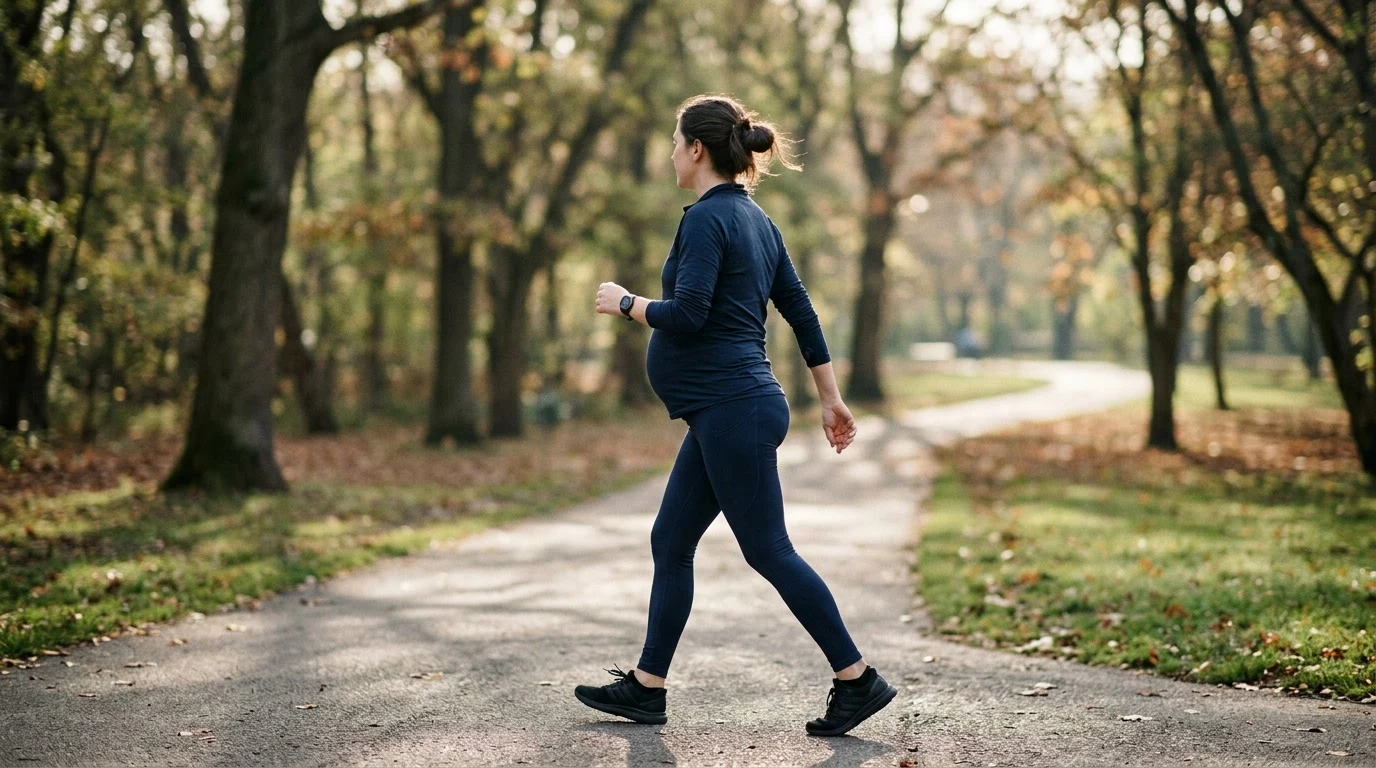
- Low-impact cardio: walking on level ground, stationary cycling (higher saddle, lower resistance), swimming, and water aerobics. The buoyancy of pool work removes most joint load while preserving training effect.
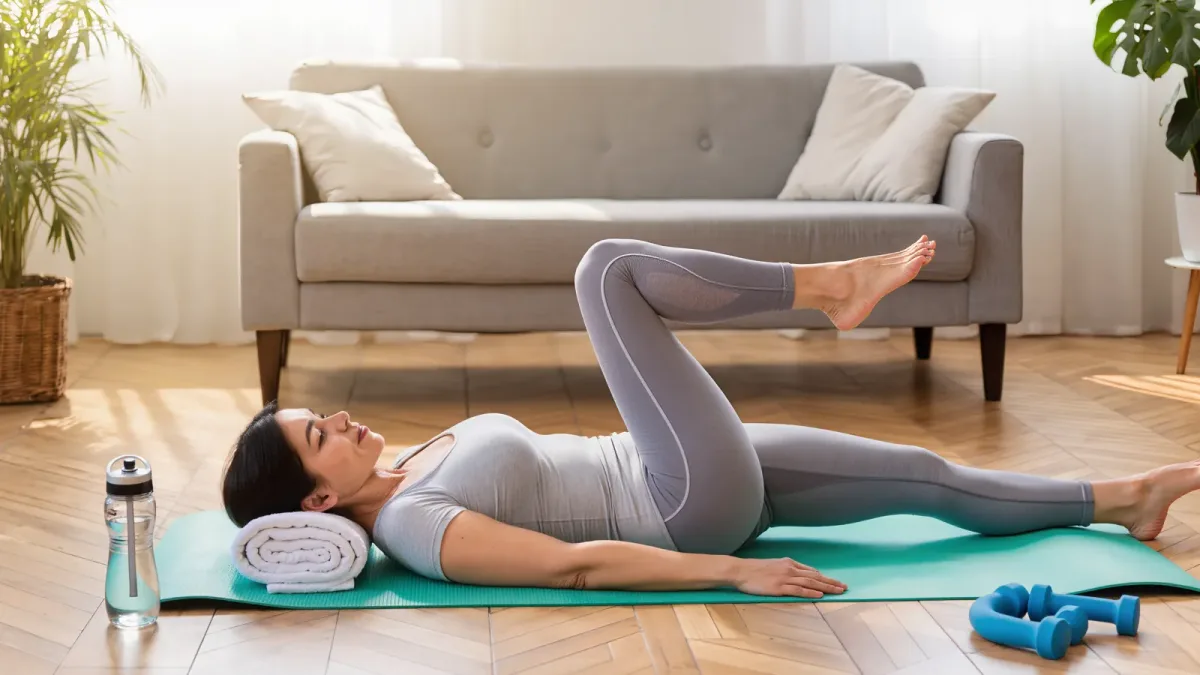
- Quadriceps work: straight-leg raises, wall sits held in a comfortable angle, and short-arc leg extensions — quadriceps weakness is one of the most consistently identified modifiable factors in knee osteoarthritis pain in observational research.
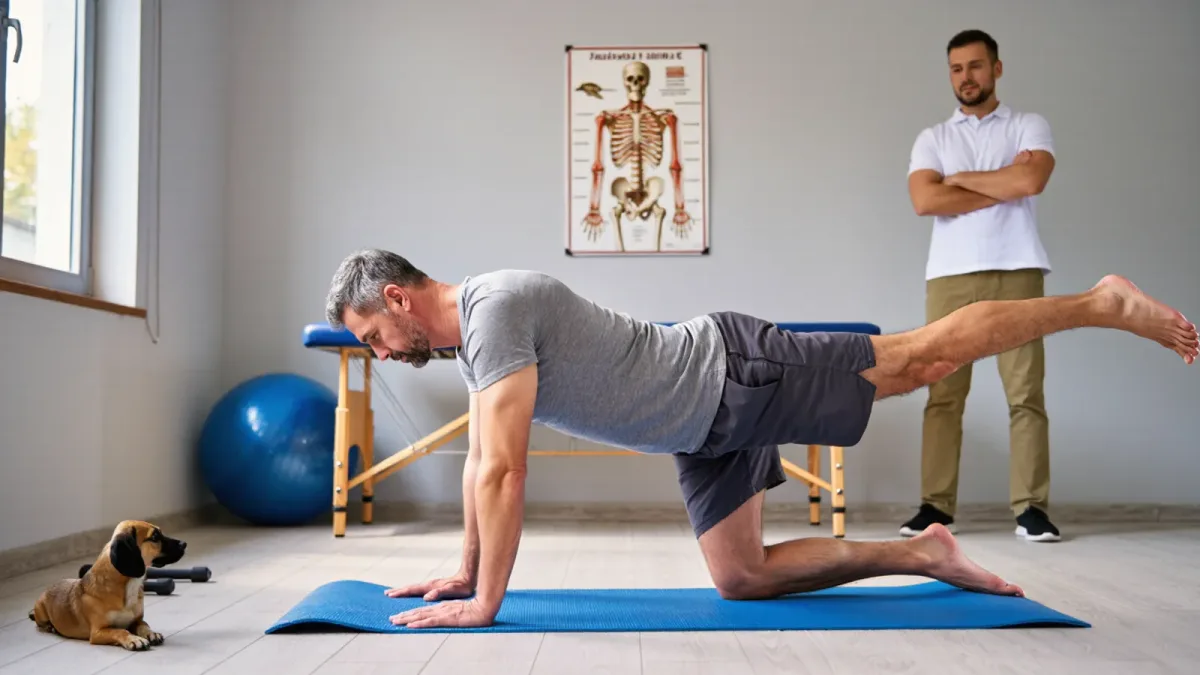
- Hip and glute strength: side-lying leg raises, bridges, and step-ups on a low step. Hip strengthening has shown meaningful knee-pain reductions in trials of runners and older adults, because better hip control changes how the kneecap tracks.
- Flexibility: gentle calf, hamstring, and quadriceps stretches, done without forcing into pain.
Avoid, for now: deep lunges, jumping, running downhill, and heavy leg presses at extreme depth — not because they are harmful in general, but because they are the highest-load options and poor first choices on a sore knee.
How much pain is acceptable during exercise?
Use the 0-10 rule commonly taught in physical therapy: discomfort up to about 3 out of 10 during an exercise that settles back to baseline within 24 hours is generally tolerated; pain above that, sharp pain, or a knee that is more swollen or stiff the next morning means the load was too much — reduce the range, resistance, or duration rather than stopping entirely. Delayed soreness after a new exercise is normal; anything that changes how you walk is not.
What does a safe weekly plan look like?
- Three to five days of low-impact cardio, 20-30 minutes, built up gradually toward the federal benchmark of 150 weekly moderate minutes (HHS, 2018).
- Two or three strengthening days for quads, glutes, and hips — two sets of 10-15 repetitions per exercise, on non-consecutive days.
- Daily gentle range-of-motion work — slow knee bends and straightening, especially on stiff mornings.
- One or two full rest days, letting soreness guide which day they fall on.
Supports and braces help some people: the 2019 ACR/Arthritis Foundation guideline conditionally recommends taping and knee braces as adjuncts, though evidence varies by individual.
Should you ice, rest, or move a sore knee?
The modern answer is graded movement, with rest reserved for true flare-ups. Extended total rest weakens exactly the quadriceps and hip muscles the knee depends on, and clinical reviews of osteoarthritis care consistently find that inactivity worsens both pain and function over time — which is why the 2019 ACR/Arthritis Foundation guideline treats exercise as treatment rather than a risk. For a mild flare after a harder-than-usual day: one or two easier days, gentle range-of-motion bends, ice for comfort if it helps, and a return to normal activity as swelling and morning stiffness settle. If every session triggers a multi-day flare, the sessions are too aggressive — halve the volume and rebuild. Physical therapists use precisely this graded model, and it is something you can copy at home with a training log and honest notes.
When should you talk to a clinician?
Stop exercising and seek medical care promptly if the knee locks, gives way, is visibly deformed, cannot bear weight, or is hot, red, and badly swollen — these suggest structural injury or infection rather than ordinary overuse. Schedule a non-urgent assessment if pain has persisted more than six weeks despite sensible loading, follows a specific twisting injury, or comes with nightly pain or fever. Anyone with significant osteoarthritis, a history of knee surgery, or joint injections should confirm their exercise plan with a clinician or physical therapist first.
The bottom line
Exercise is not just safe for most painful knees — the American College of Rheumatology and Arthritis Foundation name it first-line treatment for knee osteoarthritis (2019), and walking was associated with 40 percent lower odds of new frequent knee pain in a 2022 study of over 1,200 adults. Pick low-impact cardio, strengthen the quads and hips, obey the 0-10 pain rule, and respect the red flags that mean stop and call. If you have not been assessed, a physical therapist visit is the sensible first step.