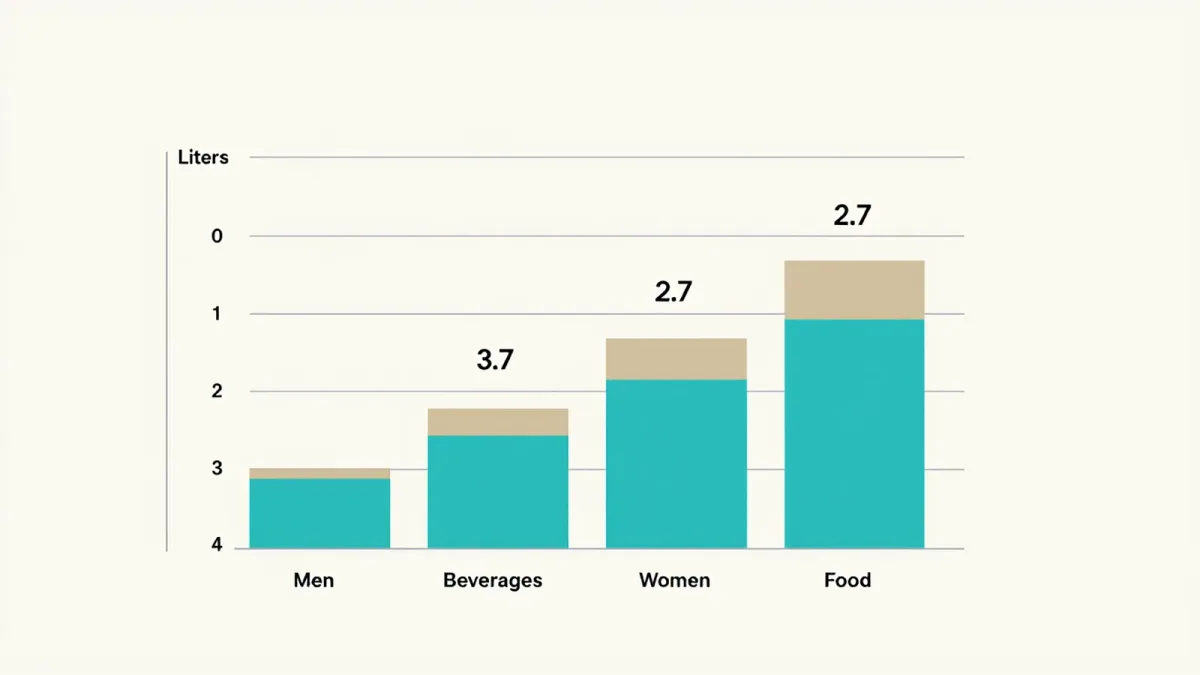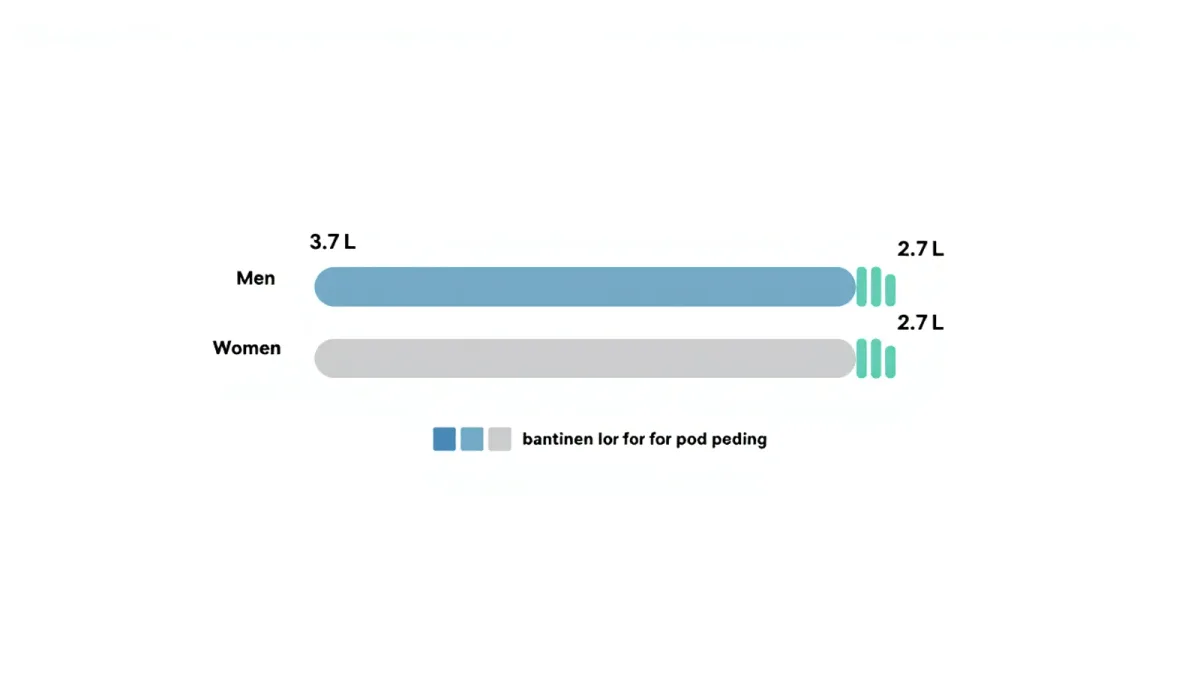
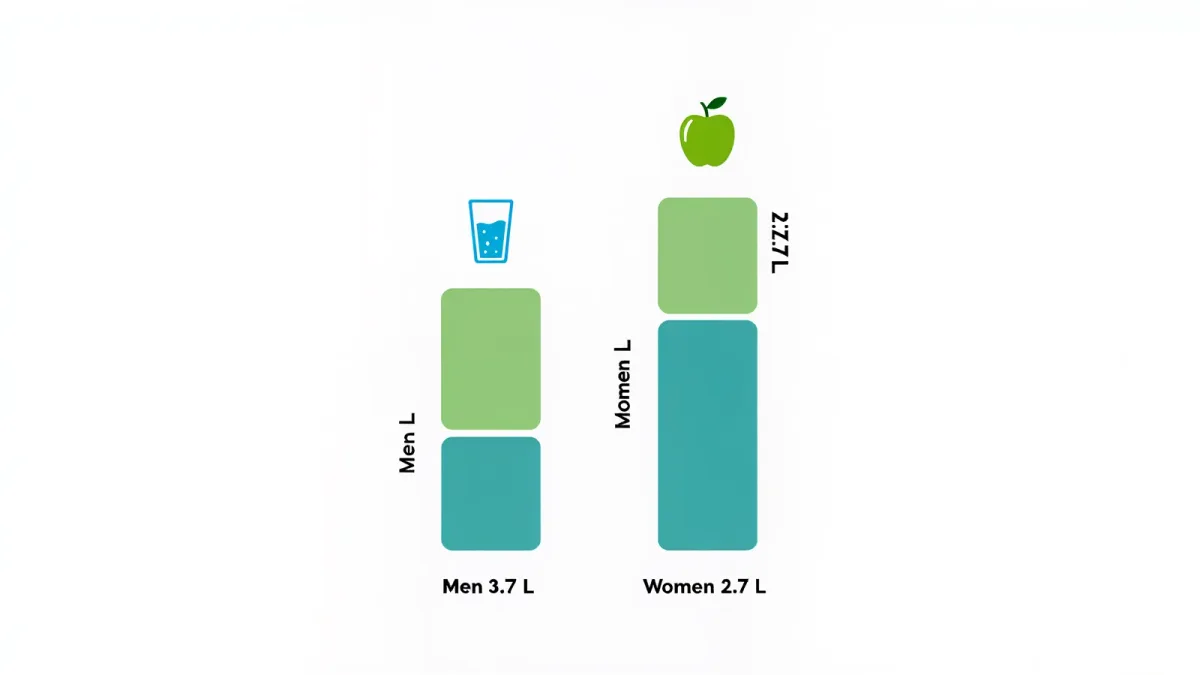
Most healthy adults do well meeting the adequate intake set by the National Academies of Sciences, Engineering, and Medicine in 2004: 3.7 liters of total water per day for men and 2.7 liters for women, counted from all beverages and food combined. Per that same report, about 80 percent of total water typically comes from drinks and about 20 percent from food, which is why the honest answer to this question is a range that depends on your body size, activity, and climate rather than one magic number of glasses.
If you have kidney disease, heart failure, or take a diuretic, your fluid targets may be lower than the average, so set them with your clinician.
Where does the 8-glasses rule come from?
Not from evidence. The familiar instruction to drink eight 8-ounce glasses a day has no strong scientific basis: a 2002 review by Dartmouth physiologist Heinz Valtin, published in the American Journal of Physiology-Regulatory, Integrative and Comparative Physiology, surveyed the literature and found no studies supporting 8 by 8 for healthy adults living in temperate climates, and noted that caffeinated drinks and food count toward hydration. The rule most likely persists because it is easy to remember, not because trials established it.
What does the evidence actually support?
The reference figures come from the National Academies' 2004 Dietary Reference Intakes for water and electrolytes, the most comprehensive official assessment available. Its adequate intakes, again, are total water from everything you consume:
| Group | Adequate intake (total water per day) | Roughly from beverages |
|---|---|---|
| Adult men 19+ | 3.7 liters (125 oz) | about 3.0 liters |
| Adult women 19+ | 2.7 liters (91 oz) | about 2.2 liters |
| Pregnancy (14+) | 3.0 liters | — |
| Lactation | 3.8 liters | — |
Two points about those numbers, both from the same report. First, they are adequate intakes set by a national scientific panel, not a recommendation from this site, and they were set at levels expected to meet or exceed most people's needs in temperate climates with typical activity. Second, they assume water from food counts, because fruit, soups, milk, and cooked grains all carry substantial water.
Do coffee and tea dehydrate you?
For regular drinkers, no in any meaningful way. The Valtin 2002 review found caffeinated beverages contribute to daily water needs comparably to water itself in habitual consumers, and the National Academies' 2004 report treated all beverages, including coffee and tea, as sources of total water. A morning coffee is not a net fluid loss for someone who drinks coffee regularly.
How do you know if you are drinking enough?
Thirst is a reliable guide for most healthy adults, per the National Academies' 2004 report, which is exactly why it declined to set a single universal prescription. Two practical check signals, per general clinical guidance summarized by MedlinePlus:
- Urine color. Pale straw suggests adequate intake; consistently dark amber suggests you are behind.
- Thirst during exertion or heat. Needs rise with sweating: the 2004 report's adequate intake assumed temperate conditions, and prolonged exercise or hot weather can raise fluid needs well above it.
Real dehydration, dizziness, very dark urine, confusion, or no urination for many hours, is a reason to seek medical care, not to just keep sipping at home.
Does drinking more water improve energy or weight?
Both claims have partial evidence, and it is worth knowing exactly what that evidence shows. On mood and focus: two randomized trials from 2012, one in men published in The Journal of Nutrition and one in women by an overlapping research team in the same journal, found that mild dehydration of about 1 to 2 percent of body mass measurably worsened concentration, headache symptoms, and mood during mental tasks. That supports staying ahead of dehydration; it does not support the idea that extra water beyond adequacy boosts energy in someone already hydrated.
On weight: a randomized trial published in the journal Obesity in 2010 followed adults aged 55 to 75 on a calorie-controlled diet and found that those who drank two cups of water before each meal lost more weight over 12 weeks than those who did not, an effect the researchers attributed partly to the water displacing some calories from the meal. If you borrow that tactic, treat it as a shift of eating behavior, not a fat-burning property of water.
Can you drink too much water?
Yes. Drinking far more than the kidneys can excrete, roughly under a liter per hour sustained, can dilute blood sodium and cause hyponatremia, a potentially serious condition documented in the National Academies' 2004 report and in sports medicine, particularly among endurance athletes who over-drink during long events. Balance, not maximization, is the goal: drink to thirst in daily life, and during long hard efforts drink to replace sweat rather than forcing large volumes.
Do you need special hydration products?
For everyday hydration, plain water does the job, and per the Dietary Guidelines for Americans 2020-2025, water is the beverage of choice among calorie-free options for most people. Sports drinks have a documented role mainly in prolonged, intense exercise lasting over an hour or in heavy heat, when they replace both fluid and electrolytes; for a normal office day they simply add sugar. Unsweetened sparkling water, coffee, tea, and milk all contribute to your total, per the 2004 National Academies report.
The bottom line
The official adequate intake, set by the National Academies in 2004, is 3.7 liters of total water a day for men and 2.7 for women, with about 80 percent from beverages and food supplying the rest, and the 8-glasses rule has no supporting evidence behind it per Valtin's 2002 review. For most healthy adults, thirst plus pale-straw urine is a sufficient guide; increase intake for heat, exercise, pregnancy, or breastfeeding, and get individualized targets from a clinician if you have kidney or heart disease or take diuretics.