
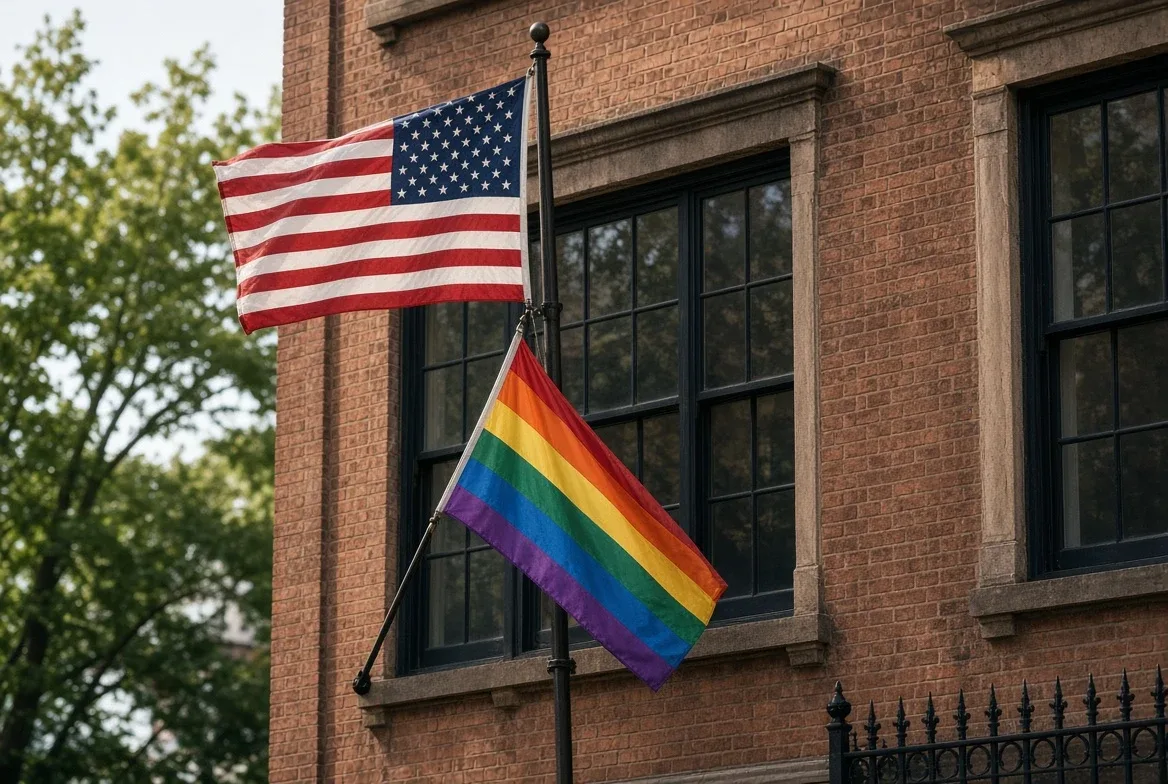
The rainbow flag is flying again over Stonewall National Monument in Greenwich Village, restored this spring under a legal settlement between the Trump administration and the LGBTQ+ and historic-preservation groups that sued after the National Park Service took it down in February, according to court filing language reported by PBS NewsHour. The dispute over one flagpole in Manhattan shows how quickly a federal symbol can become a federal case — and how the case ended in a settlement, not a change of policy.
Why Did the Flag Come Down in the First Place?
The National Park Service removed the rainbow flag from Stonewall National Monument in early February 2026, acting on a January 21 NPS memo that restricted the agency to flying only the U.S. flag, the Department of the Interior flag, and the POW/MIA flag, PBS NewsHour reported. The agency said it was "simply complying with recent guidance that clarifies longstanding flag policies and applies them consistently," according to the outlet. The flag had flown at the monument since 2019; smaller Pride flags remained along a nearby fence exhibit even after the main flag came down. Longtime LGBTQ+ rights activist Ann Northrop called the move "a disgusting slap in the face," adding it was "mind-blowing that they think they can excuse this," PBS NewsHour reported at the time.
The flag was not the only thing that changed at Stonewall that winter. PBS NewsHour also reported that the National Park Service's website for the monument was temporarily taken offline after the change in administration, and that references to transgender people were later removed from the site — part of the same stretch of months in which the flagpole policy shifted.
What Is Stonewall National Monument, and Why Does It Fly a Pride Flag?
Stonewall National Monument commemorates the Stonewall Uprising of June 28, 1969, which the National Park Service describes as a milestone in the fight for civil rights that helped catalyze the modern LGBTQ+ rights movement. The monument centers on Christopher Park in Greenwich Village and includes memorial gardens, statues, and a fence exhibit of historical photographs and community stories tied to the uprising and the people who took part in it, per the park service. President Barack Obama designated the site in 2016 as the nation's first LGBTQ+ national monument, PBS NewsHour reported — a distinction that made the flagpole itself a marker of that history for visitors, not just a decoration on federal property.
That history is why the flag's removal registered beyond Greenwich Village. A national monument built specifically to honor LGBTQ+ history flying, and then not flying, a Pride flag was read by the groups that sued as a message about which parts of that history the government was willing to keep marking in public.
How Did a Lawsuit Turn Into a Flag Back on the Pole?
LGBTQ+ rights and historic-preservation groups sued the administration over the flag's removal, and by mid-April the government agreed to settle rather than fight the case in court, PBS NewsHour reported. In joint court filing language cited by the outlet, the Interior Department and National Park Service "have confirmed their intention to maintain a Pride flag at Stonewall." Under the settlement, the restored flag flies below the U.S. flag and above the National Park Service flag, each three by five feet, in keeping with federal flag code standards — and it comes down only for "maintenance or other practical purposes," per the filing language PBS NewsHour described. That is a narrower, court-enforceable commitment than a policy announcement would have been: it is now a term of a settled lawsuit, not a discretionary choice an agency could reverse with another internal memo.
Who Reacted, and What Did They Say?
Manhattan Borough President Brad Hoylman-Sigal called the outcome a "legal climb-down," saying, "We fought the Trump administration and won," and describing the original removal as a "contemptuous attempt to erase queer people from American history," PBS NewsHour reported. Gilbert Baker Foundation president Charley Beal, whose organization is named for the designer of the rainbow flag, said in a statement carried by the outlet: "Stonewall is sacred ground in the fight for LGBTQ+ liberation, and this resolution helps ensure that the Rainbow Flag will continue to fly there, where it belongs." Taken together with Northrop's reaction back in February, the record PBS NewsHour compiled shows a single community response that shifted from anger at the removal to a guarded declaration of victory once the settlement landed — guarded, because the underlying rule that triggered the removal is still on the books.
What Happens Now?
The settlement binds the flag's status at Stonewall specifically; it does not rewrite the January 21 NPS memo that triggered the removal in the first place, which still governs flag displays at other national park sites, per PBS NewsHour's reporting. That leaves the broader policy in place even as the outcome at this one monument favors the groups that sued. For a single three-by-five-foot flag, the mechanics are now spelled out in court papers rather than left to an agency memo — which is exactly why advocates who fought the removal are treating the settlement, and not just the flag's return, as the win.
For visitors to Christopher Park, the practical result is straightforward: the rainbow flag is back in its place beneath the U.S. flag, the fence exhibit of Stonewall photographs and stories remains up, and the monument's status as the first national monument dedicated to LGBTQ+ history is unchanged. What changed is procedural rather than symbolic — a dispute over one flagpole is now something a federal agency answers to a court about, not just to the public.
For a related inclusion perspective, read The Hiring Credit for Veterans and Job Seekers With Records Just Lapsed.
For more context, read Zone 2 Cardio: What the Research Actually Supports.
For more context, read Skin cycling isn't a vibe, it's a math problem for your face.
For more context, read What snail mucin actually does, according to the research.